Bulgaria and the First World War
Deliberations About Joining the Conflict
Bulgaria’s reasons for participating in the First World War are found primarily in Bulgarian’s wish for national unification. In 1885, the Principality of Bulgaria and Eastern Rumelia had proclaimed their union. Following that union, the young state’s main task was the accession to it of other Bulgarian territories, as well as the Bulgarian populations in Macedonia and Adrianople, since the 1878 Treaty of Berlin had declared that these lands would remain part of the Ottoman Empire.
In 1908, when Bulgaria declared its independence, the nation’s monarch Tsar Ferdinand I and Bulgaria’s political elite focused their attention on the accession of the Bulgarians from Macedonia and Adrianople. Because this could not be achieved through diplomacy or outright revolt, such as the 1903 Ilinden-Preobrazhenie Uprising against the Ottoman Empire, the only path available for accession appeared to be war.
Bulgaria’s victories over the Ottoman Empire’s forces in the First Balkan War of 1912-1913 resulted in an expansion of Bulgaria’s territory. But a few months later came the catastrophe of the Second Balkan War in which Bulgaria was defeated by Serbia and Greece (which had been former allies), as well by the territorially acquisitive Romania and Turkey.
Bulgaria’s Neutrality in 1914
In response to the assassination of the heir to the Austro-Hungarian throne Franz Ferdinand in Sarajevo on July 28, 1914, Austria-Hungary declared war on Serbia and then invaded. And so began the long-awaited and long-prepared for military confrontation between the Entente and the Central Powers. Bulgaria remained neutral, maneuvering with each side to secure the most advantageous offer before joining the hostilities. Invitations from the belligerent powers soon came to have Bulgaria join their side. In the summer of 1915, the Entente made generous promises of territory that would be taken from the Ottoman Empire. The Entente also offered to advocate on Bulgaria’s behalf for territorial compensation from Serbia, Greece and Romania. However, these promises had been made without prior approval from Belgrade, Athens and Bucharest, and all three Entente nations categorically refused to make any concessions.
In turn, the Central Powers, led by Germany, guaranteed that after their victory they would give to Bulgaria Macedonia and all of Serbia. They also offered to negotiate with the Ottoman Empire for territorial concessions. And finally, in the event that Greece and Romania should join the Entente, they promised to return to Bulgaria all the lands taken from it by Greece and Romania after the Second Balkan War.
Germany’s temporary military success in 1915 over the Belgian, French and British forces, were an important reason why the Bulgarian government preferred the option of siding with Germany and Austria-Hungary. But opponents in Bulgaria’s opposition parties favoured siding with the Entente, and in September 1915 they warned Tsar Ferdinand I of the great risks of confronting the Entente. But ultimately, Bulgaria’s desire for revenge, territorial expansion and national unification proved stronger than any caution brought about by its recent defeat in the Second Balkan War.
Despite Bulgaria’s considering the advantages of joining one side or the other, its decision to side with the Central Powers had already been made. In early September 1915, a secret agreement and treaty had been concluded with Germany. This was supplemented by a military convention with Austria-Hungary and Germany. In return for joining the Central Powers, Bulgaria was to receive territory after the war from its neighboring Balkan states as well as a loan equivalent to two hundred million French francs. Also, on the same day, a convention was signed with the Ottoman Empire, regarding “corrections” to the border along the lower reaches of the Maritza river that would favour Bulgaria.
Entering the Conflict in 1915
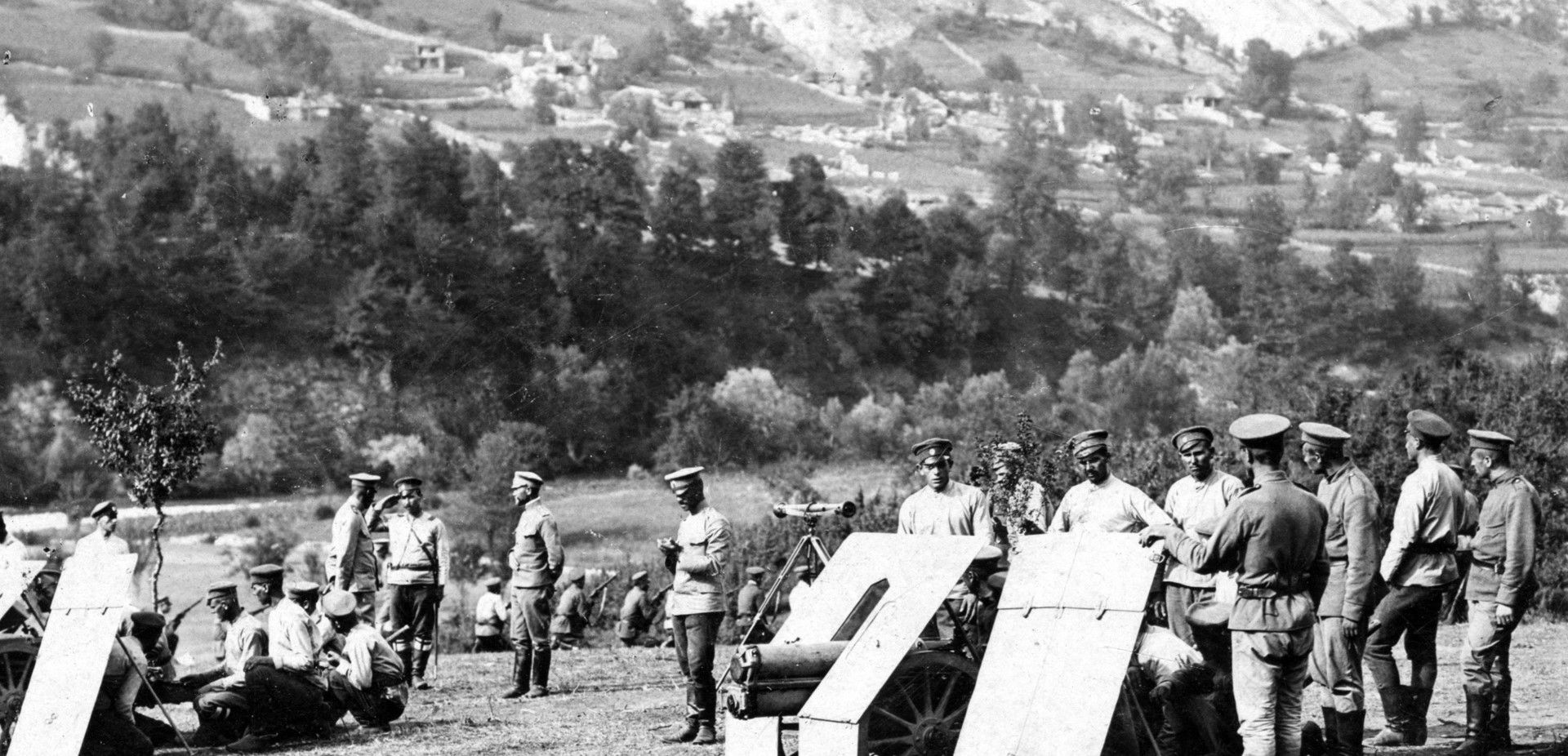
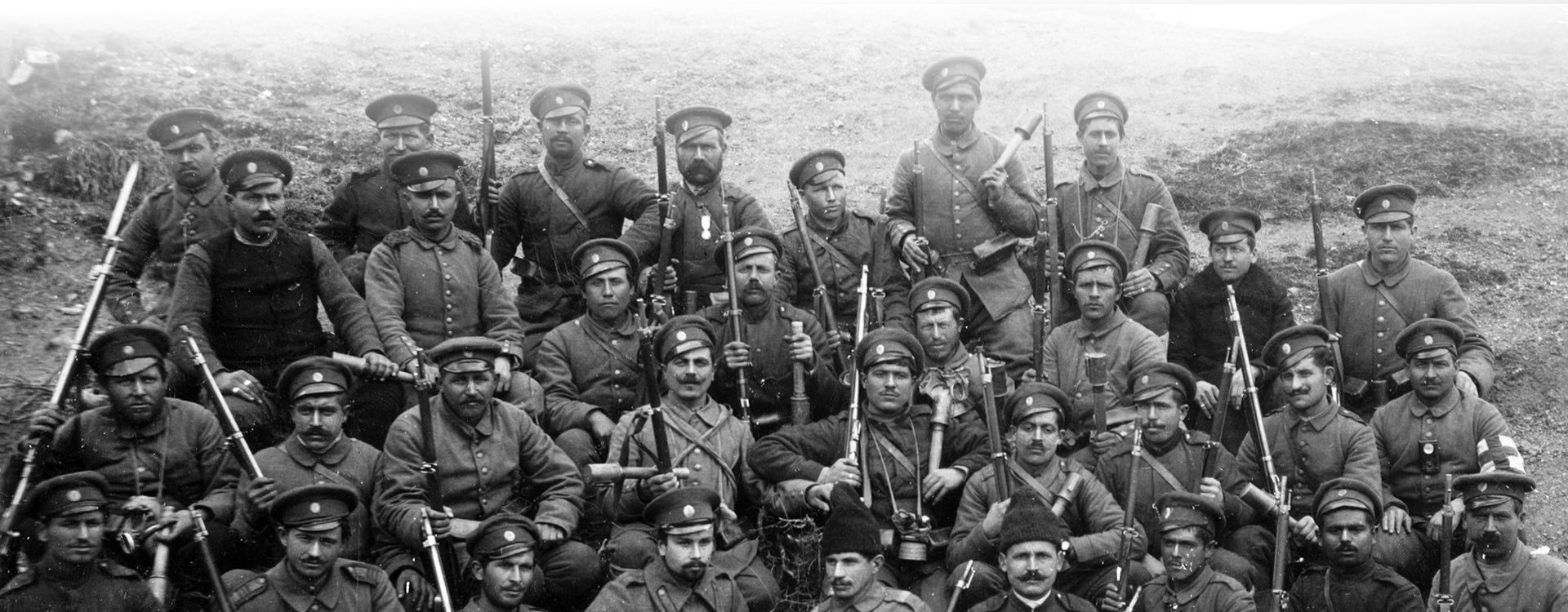
Bulgaria conducted a general mobilization on September 23, 1915, and declared war on Serbia on October 14. The First and Second Armies advanced against Serbian forces, while the Third Army remained in northern Bulgaria to deal with potential threats from Romania. In 1915 the Bulgarian army had 530,000 officers and men, but that number reached 850,000 by the war’s end.
Bulgaria’s participation in the First World War could be divided into an “offensive” period from October 1915 to late 1916, and a “positional” period from 1917 to the end of the war in 1918. During the offensive period, Bulgarian troops managed to break the resistance of Serbian forces as well as those of the Entente units that had come to Serbia’s aid. Bulgaria inflicted defeats on the enemy in Timoshko, Pomoravie and Macedonia. Serbian forces were completely defeated. However, the German military command ordered Bulgaria’s offensive to halt at the Greek border which meant that subsequently the Entente was able to open a second front against the Central Powers. In the territories Bulgaria had declared liberated, military inspection districts were established, and Moravian and Macedonian administrations were put under Bulgarian legislation. Later, a third military inspection district was formed in the Aegean Sea.
On September 1, 1916, Bulgaria declared war on Romania which had joined the Entente. The next day Bulgaria’s First Cavalry Division entered Dobrudzha. With the help of Turkish troops, Bulgaria’s Third Army defeated the Romanian army which was being supported by Russian and Serbian forces. The seemingly impregnable Tutrakan fortress was also overcome and on December 6, Romania’s capital of Bucharest was captured. Romania capitulated, but this situation would last only until November 1918 when Romania re-entered the war. Meanwhile Bulgarian forces established a stable front – the Dobrudzha (Northern) front – against Russian troops across the Danube River.
The “Positional” Period from 1917 through 1918.
In 1916 a balancing of power emerged between the opposing armies on Bulgaria’s Western Front (in Serbia) and its Southern Front (along the border with Greece). Subsequently military actions took on a positional character. In 1917 both Russia and Romania withdrew from the war and as a result the Bucharest Treaty of 1918 transferred Southern Dobrudzha to Bulgaria. Northern Dobrudzha was left temporarily under the administration of the Central Powers, but would be later returned to Bulgaria, as well as all of Dobrudzha, under the Berlin Protocol.
In 1918, Bulgaria and its allies were in a difficult position since serious economic stagnation had occurred and the maintenance of a large army had become unsustainable. Essential goods disappeared, and the black market and speculation became rampant. Hunger riots broke out in a number of places, followed by the so-called women’s riots owing to the shortages of food. Sharp discontent arose among soldiers and at the front and individual military units were gripped by unrest.
With this complex situation both in military affairs and civilian life, Prime Minister Vasil Radoslavov, who had held power since 1913, resigned on June 15, 1918. A week later, Alexander Malinov formed the next government. Although the new government was formed by representatives of pro-Entente parties, it maintained its political and military obligations to the Central Powers. It also tried to prevent any retreat from Bulgaria’s national unification goals which had been clearly formulated during the war years.
When the United States joined the war against Germany and Austria-Hungary in April 1917, the scales tipped sharply in favour of the Entente which then increased its forces on various fronts, including Bulgaria’s Southern Front. However, US President Woodrow Wilson’s Fourteen Points – his new principles for post-war relationships between nations – had been introduced to the US Congress in January 1918 and they gave Bulgarians hope that following hostilities there would be a fair settlement of Bulgaria’s national territorial aspirations.
The End of Bulgaria’s Involvement In The War
Subsequent events were not however in Bulgaria’s favour. In September 1918, after days of Allied artillery bombardment on the Southern Front, an Entente offensive broke through Bulgarian defenses at Dobro Pole. This was followed by an additional Entente offensive towards the old borders of Bulgaria.
The resulting defeats for Bulgaria triggered the Vladai (soldiers) Uprising. As Bulgarian troops abandoned the front, it was left in disarray. The rebels then seized the Bulgarian Military Command’s headquarters in Kyustendil. Their leadership, represented by agricultural leader Aleksandar Stamboliyski, the self-proclaimed chairman of the Provisional Government, and Rayko Daskalov, the commander-in-chief of the deserting soldiers, declared the so-called “Radomir Republic”. The rebellious soldiers then headed for Sofia, Bulgaria’s capital. But a counteroffensive by government units put an end to the rebellion.
The Bulgaria Signs An Armistice
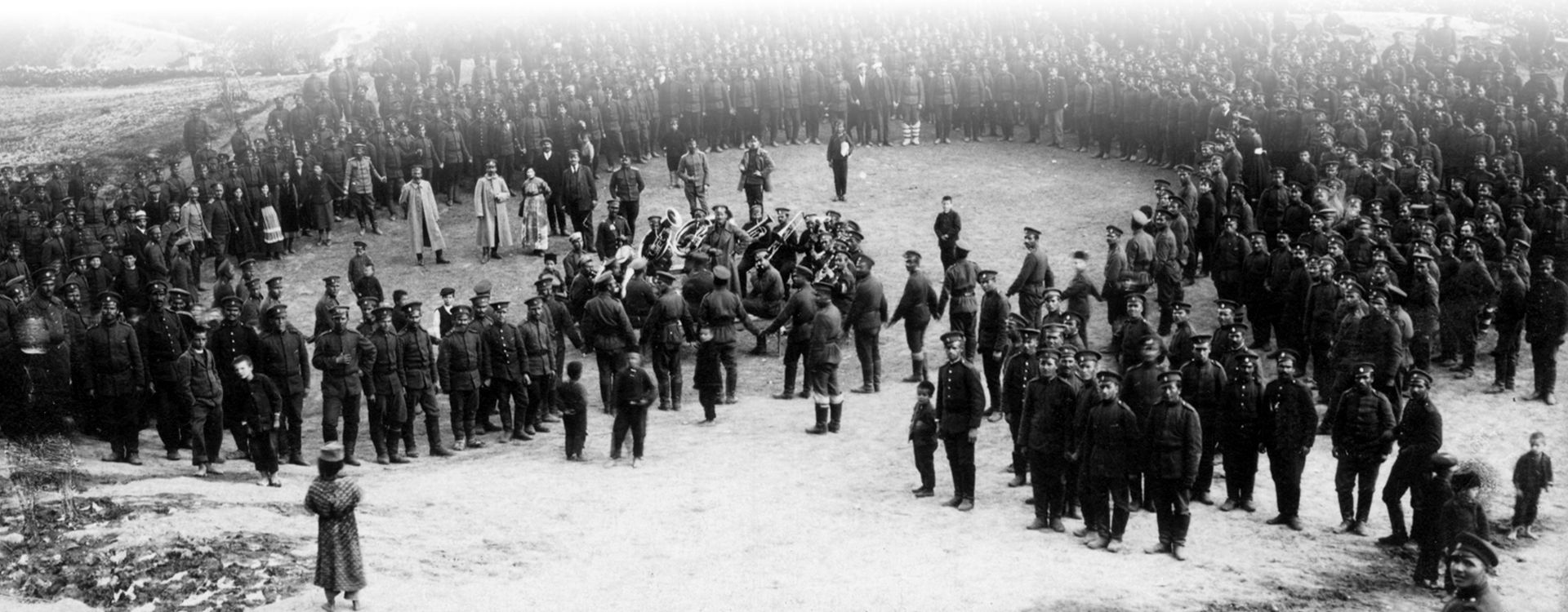
The soldiers’ mutinies together with military setbacks at the front, forced Bulgaria to sign an armistice in Thessaloniki on September 29, 1918, ending its engagement in the First World War. The armistice’s conditions included: the withdrawal of Bulgarian troops from Serbia and Greece; Bulgaria’s immediate demobilization; the hand over of Bulgarian prisoners of war located west of the Vardar River; and the withdrawal of German and Austro-Hungarian troops and their countries diplomatic representatives. Entente forces received the right to pass through Bulgarian territory, to use Bulgaria’s railways, roads, waterways and ports, and to take control of telephone and telegraph networks. The Entente’s plan was to occupy strategic locations and open Bulgaria’s Black Sea ports to Entente and neutral shipping. Tsar Ferdinand I was forced to abdicate in favour of his son, Prince Boris of Tarnovsky.
After The Armistice
The Neuilly Peace Treaty signed November 27, 1919 was even more disastrous for the country. Under the treaty, Bulgaria lost Vardar Macedonia along with the Strumitsa region, which was absorbed into the Serbo-Croatian-Slovenian Kingdom (SCS). In addition, Bulgaria lost its western most regions, along with the cities of Tsaribrod and Bosilegrad, which were also handed over to the SCS Kingdom. Romania received all of Dobrudzha. The Aegean Sea was initially placed under the rule of the Entente, and later would become part of Greece. Eastern Thrace remained part of Turkey. Under the Neuilly Treaty, Bulgaria lost its right to maintain its own armed forces, and the reparations imposed on Bulgaria – a total 2.25 billion gold francs – were colossal. More than one hundred thousand Bulgarian soldiers and officers had lost their lives or had gone missing on the battlefields, and tens of thousands more had been wounded or had become prisoners. Bulgaria’s economy collapsed under this second national catastrophe, which put a tragic end to its dream of national unification.
Treatment of Prisoners Of War and Prisoner Exchanges During The War
Along with the war’s military operations, the treatment of prisoners of war was of particular importance. Bulgaria strictly observed the 1907 Hague Convention rules, according to which troops captured by an enemy were to be guaranteed their right to religious beliefs, gifts and assistance-in-kind for prisoners would be exempt from duties and taxes, and captured officers would receive the same salary as officers in the country in which they were detained. Concerning the treatment of prisoners, Article 14 of the Hague Convention provided for the establishment of a Prisoners of War Liberation Bureau which would be responsible for the exchange or relocation of prisoners, their release, their treatment while imprisoned, and so on.
At the beginning of the war, Bulgaria established such a bureau within the Ministry of War whose formation, structure and tasks were determined by the Prisoners of War Regulations. The bureau had rules governing the treatment of foreign prisoners, maintaining order in prison camps, and the use of prisoners as labourers. On March 27, 1918, the regulations were repealed and revised rules for prisoners and internees were announced. An Inspectorate was formed within the Ministry of War with authority over internees and prisoners of war, the camps that housed them and the distribution units that sent prisoners and internees to designated camps. The first camp – the Sofia depot – had been set up on October 10, 1915, and was followed by camps in Orhanie (present day Botevgrad), Sliven, Kazanlak, Plovdiv, Vratsa and Shumen.
By end of the hostilities in 1918, the treatment of prisoners had become quite liberal, despite attempts for stricter treatment. Prisoners were mainly used as labour in strengthening military positions, draining flooded areas, building roads and railways, and assisting the reconstruction of settlements that had been destroyed by military actions. Prisoner exchanges were carried out between Bulgaria and the Entente. Priority was given to men who were unfit due to illness, disability or other reasons, or those who had been detained only until they could be exchanged for Bulgarian prisoners. For its time, medical care for prisoners of war was at a high standard. According to the Military Sanitary Unit’s May 1917 report to the Minister of War, the incidence of typhus among prisoners of war in Bulgaria was much lower than among Bulgaria’s own soldiers.
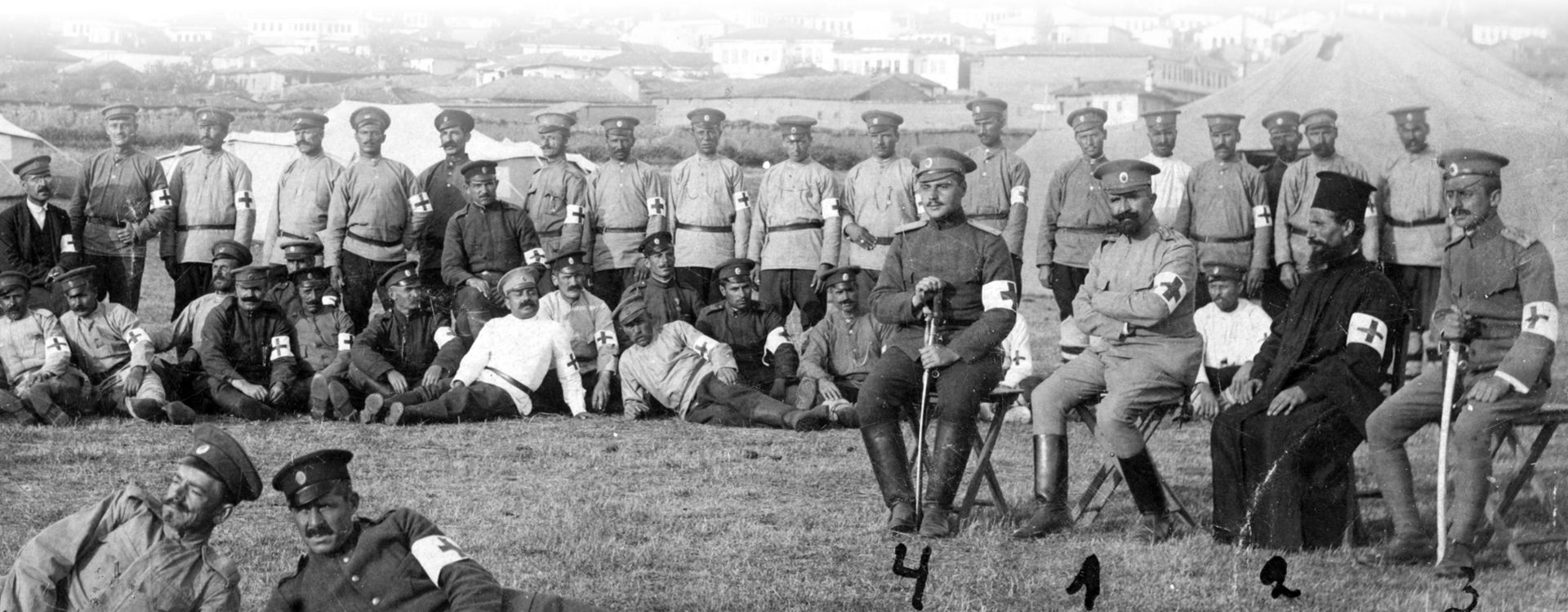
Bulgarian civilians collected aid for their soldiers who were held as prisoners abroad. Aid was also collected by the Red Cross and other charitable organizations across Bulgaria. A reason behind this was the Bulgarian civilian society’s view that as a whole, captured Bulgarians were treated badly, a view that could only be documented after the signing of the 1918 Thessaloniki Armistice and especially after the signing of the Treaty of Neuilly in 1919.
The Repatriation of Prisoners After The War
After the signing of the Neuilly Treaty, foreign prisoners and internees in Bulgaria were released and their repatriation began. Bulgarian authorities made significant efforts to complete this in a timely manner because of their conviction that the release of foreign prisoners held in Bulgaria and the speedy release of Bulgarian prisoners, internees and hostages held abroad, would be directly dependent. Particularly sensitive was the issue of the repatriation of Russian prisoners to their homeland since after the October Uprising of 1917, a large number did not want to return to a country in which the Bolsheviks had taken power.
Bulgarian authorities took special care in the return of captured Bulgarians from abroad, relying on the terms in the Treaty of Neuilly. According to the treaty’s Article 105, “The return of Bulgarian prisoners of war and interned civilians will be carried out as soon as possible after the entry into force of the present treaty and will be carried out with the greatest speed”. From April 1919 to April 1920, 48,572 hostages and prisoners returned to Bulgaria. Unfortunately, the process was not straightforward and the return of Bulgarians continued into the late 1920s. According to records from the Army Headquarters, as of July 1920, the number of Bulgarian still prisoners of war or hostages, was 111,811.
In addition to attempting to complete the return of Bulgarians from foreign camps, the authorities also cared for their prisoners who had arrived back in the country. By Royal Decree No. 21 of March 31, 1920, the construction of barracks at the Sveti Vrach station (present day Sandanski) was approved to provide shelter, food and medical care to prisoners and hostages returning from Thessaloniki. The military also did not stand aside. It designated the hospitals at the Sandanski station and the Lyubimets station to provide medical care to weak or sick Bulgarian servicemen returning from Allied captivity.
The prominent Bulgarian diplomat, philosopher and political emigrant Stefan Popov, who had experienced the hardships of forced life abroad, wrote: “A new change had occurred in Bulgaria’s relations with Europe, mainly determined, or better yet accelerated, by the First World War. Equal trenches and equal captivity equalized the supposed differences between the great and the small.” The relevance of Popov’s words is still valid today in the present day political conditions of the Old Continent.
Of course, the greatest tragedy of the First World War is the number of fallen soldiers and the difficult fate of their families. About 90,000 Bulgarians died on the battlefields, and this does not include victims amongst the civilian population. As a sign of respect and for the convenience of their descendants, in 1915 the State Archives Agency created the archival collection “The Wars of Bulgaria”, in which the website https://wars.archives.bg/ww1 dedicated to the First World War takes its rightful place.
A major place in the collection is given to the rubric “Lists” with personal data about the officers, soldiers and civilians who participated in the wars. The database was created on the basis of the lists of awarded, deceased, and other participants in the wars, stored in the documentary array of the State Military Historical Archives in Veliko Tarnovo. The memory of those who died and suffered in the First World War must be preserved and passed on to future generations. Hopefully, they will learn the necessary lessons and not only remember the events and personalities, but also, with their words and deeds, prevent the repetition of these tragic events, which gave the initial impetus to an even bloodier conflict in the 20th century.
The Central State Archives of Bulgaria