France and the First World War
1914: A Relentless Spiral
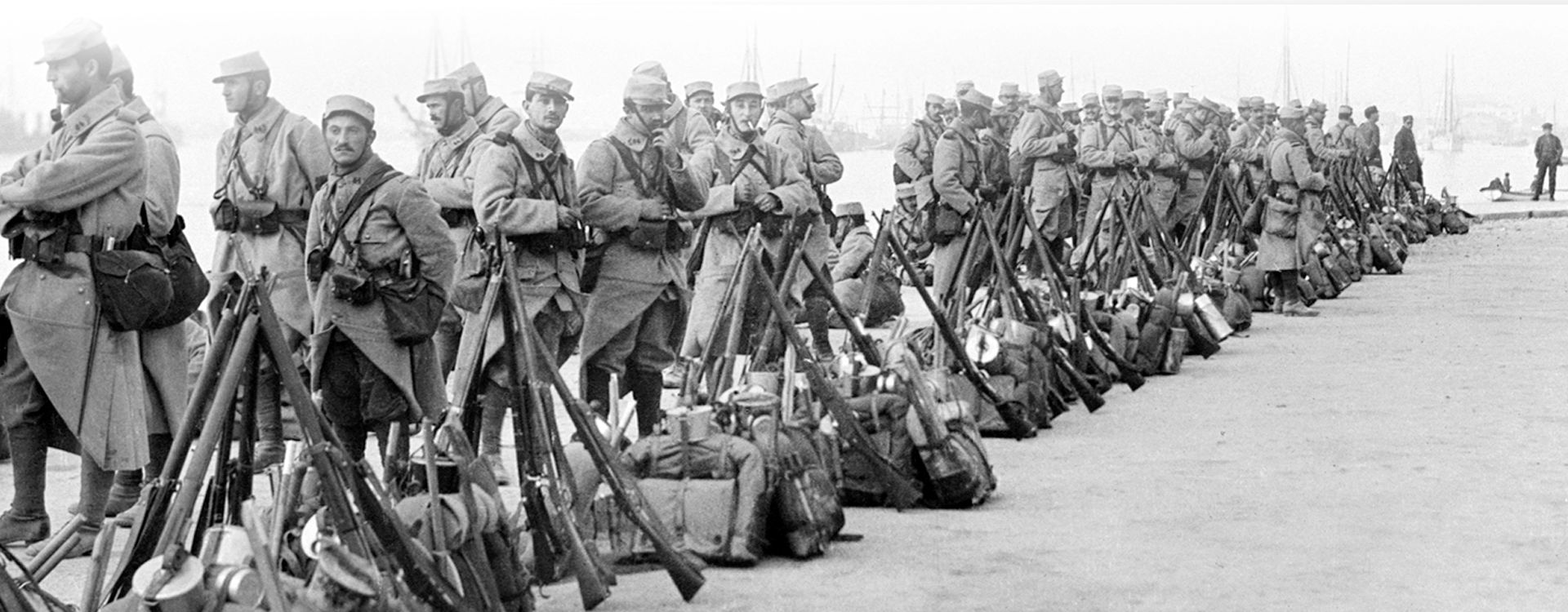
On August 3, 1914 with the support of its military allies in Europe, the German Empire declared war on France. The French had their own alliances, and found themselves fighting alongside the British Empire and Tsarist Russia against the Central Powers. Under the command of the future marshal, General Joffre, the French Army mobilised in less than a month and successfully stopped the advancing German troops at the First Battle of the Marne between September 5 and 12. But the casualties were horrendous: on August 22, 1914 France lost more than 20,000 soldiers in a single day of combat
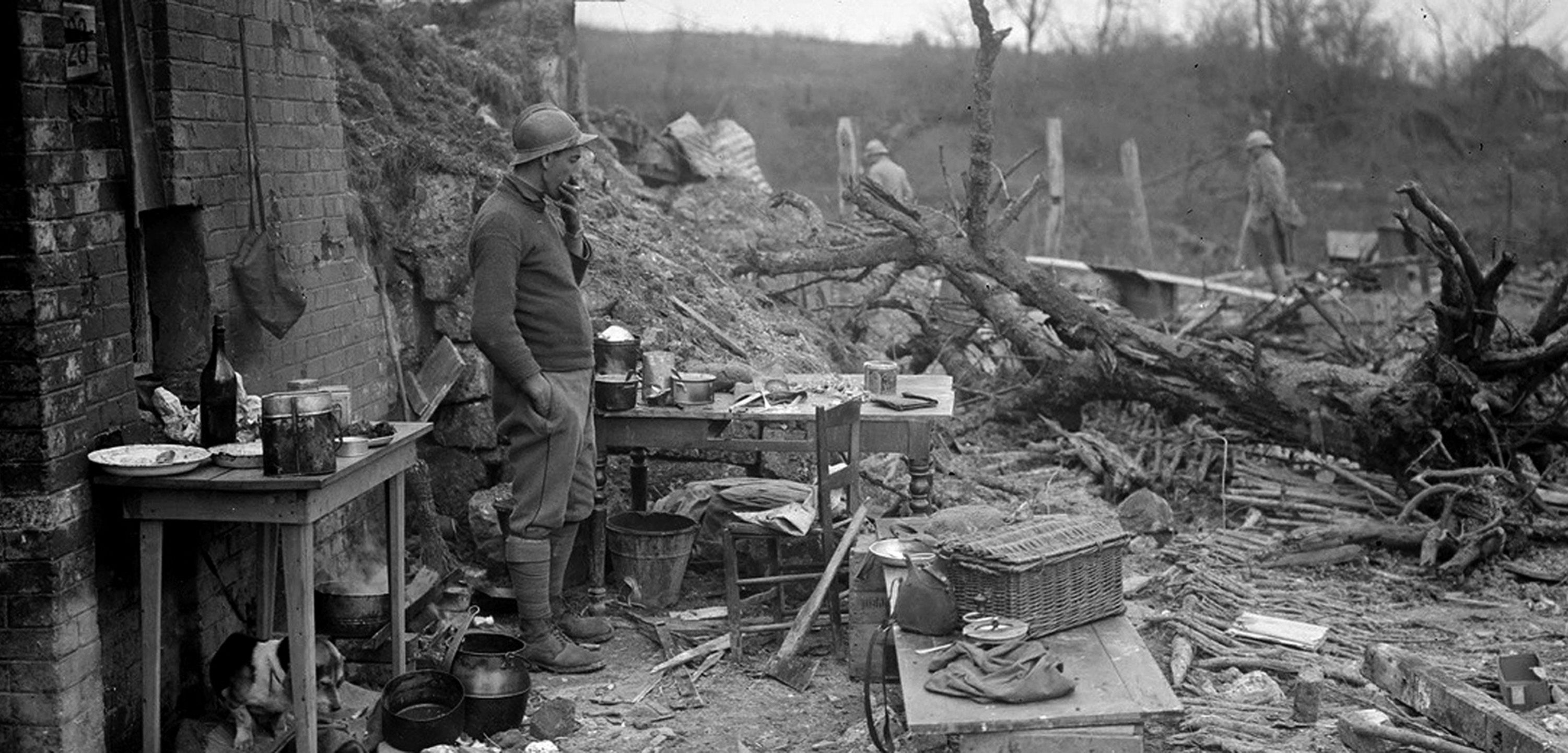
Trench Warfare
At the end of 1914 the front stabilized and French soldiers dug trenches to protect themselves from the Germans opposite them, who were forced to do the same. After more than a year of attempts by both sides to break the front lines, the Germans sought in vain to win at the terrible Battle of Verdun, which lasted from February to December 1916 and resulted in 400,00 casualties on each side. On July 1, 1916 the British and the French attacked the Germans during the Battle of the Somme, which was just as bloody. Neither of these confrontations was decisive. Less than a year later, the ambitious April 1917 offensive at the Chemin des Dames also ended in failure, inciting some of the French units to refuse to obey further orders to attack, although they continued to hold the line. It took time for morale to be restored, and General Pétain, the Commander-in-Chief, decided to attack the Germans where they were at their weakest, to minimize the loss of life during isolated and localized assaults. The Battle of La Malmaison between October 23 and 25, 1917 was a limited victory, but the trust of the French soldiers was regained as General Pétain involved himself more directly with the troops than his predecessors.
The Bloody Offensives of 1918
The Germans were victorious on the Eastern Front against Russia, in the middle of the Bolshevik Revolution, which began in March 1917. Germany was then able to reinforce its army against the French and the British on the Western Front, with its newly available units. The Americans, who joined the war in May 1917, started to send supplies and soldiers to Europe. These troops were trained for the most part by the French Army. Despite their initial success, the great offensives of German General Ludendorff in the spring of 1918 failed. The German authorities were forced to sign the armistice in the glade of Rethondes on November 11, 1918. This victory was also the result of the efforts of the French and British navies, which suffocated the financial resources of the German Reich and its continental allies, preventing them from procuring any supplies.
A Destroyed Country and a Bleeding Population
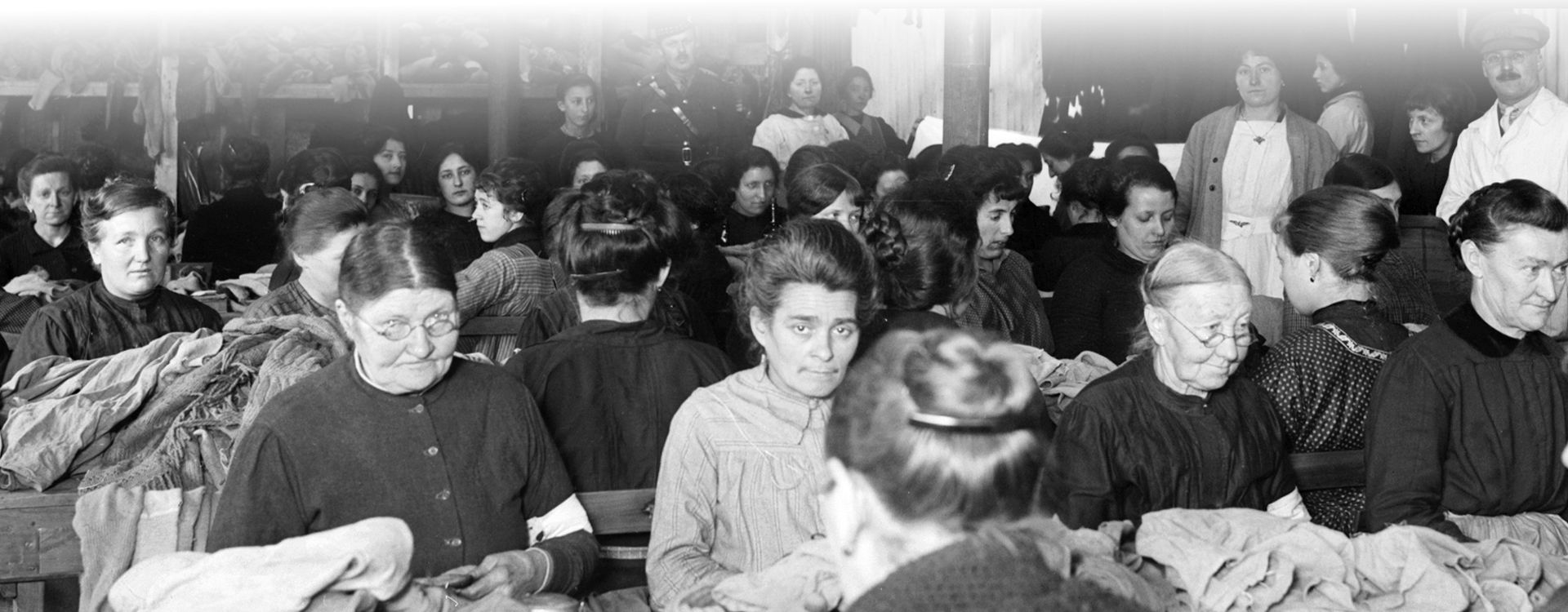
France was bled white by the First Word War: it suffered the deaths of 1,700,000 men, women, and children, of which 1,300,000 were combatants. By the end of the war, its army was modernized and partially mechanized, thanks to the emergence of new weapons, of which tanks and planes are the most representative examples. Its leaders enjoyed great prestige, such as Marshal Foch, who was appointed the Commander-in-Chief of the Allied Armies in March 1918. The French colonial empire actively participated in the war effort for the metropolis by sending soldiers, workers and raw materials. French women replaced the men in the factories and in the countryside, which resulted in their emancipation. France was a weakened power at the end of the conflict, primarily due to its massive human loss. Owing to its difficult financial situation, France had to rely on the United States for support.
From Grief to Pacifism
The French population, traumatized by the horrendous casualties and the wounded who had returned from the front, including the famous gueules cassées (broken faces), turned to pacifism and rejected any idea of confrontation, in particular with Germany. On July 14, 1919 during the Victory Parade on the Champs-Élysées in Paris, the French Army basked in glory that only the defeated could contest. Yet France had been injured like never before in its history. The decision to place the tomb of an unknown soldier beneath the Arc de Triomphe in 1920 symbolizes all the recognition of the French population for its combatants, who had been nicknamed the poilus. Since then, the nation honours its lost on November 11, in many military cemeteries and at war memorials in every commune.
The Department of Heritage of Memory and Archives (DPMA), France