Croatia and the First World War
The Great War, which began on July 28, 1914 with the assassination of Archduke Franz Ferdinand and his wife, Sophie, in Sarajevo, found Croatia on the side of the Central Powers. The Croatians were part of the multinational Austro-Hungarian Empire ruled by the Emperor of Austria and King of Croatia and Hungary, Franz Joseph I. The Empire was composed of two state governments: Cisleithania, the western part of the Austro-Hungarian Empire, had its seat in Vienna and was known as the ‘kingdoms and lands represented in the Imperial Council.’ The western part contained the historical provinces of Upper and Lower Austria, Tyrol, Vorarlberg, Styria, Carinthia, Carniola, Gorizia, Gradiška, Trieste, Istria, Dalmatia, Bohemia, Moravia, Silesia, Galicia and Bukovina. Transleithania, the eastern part of the Empire, was known as the ‘lands of the Hungarian Crown,’ which included Hungary, Croatia, Slavonia and the city of Rijeka. Its seat of governance was in Budapest. Bosnia and Herzegovina was governed jointly by both parts of the dual Monarchy.
Although initially conceived as a short war, the First World War soon turned into a protracted and exhausting conflict fought mainly through trench warfare. It engulfed the populations of some forty countries. Although fighting did not take place on Croatian soil, Croatian soldiers participated on all the major battlefields in which the Austro-Hungarian Army was engaged.
Croatian Military Forces
The Austro-Hungarian Army was divided into sixteen corps mobilisation districts: eight Austrian, five Hungarian, one Croatian/Slavonian, one in Bosnia and Herzegovina and one in Dalmatia, with a total of 112 recruiting areas. The soldiers from the Croatian provinces participated in the joint army and home defence units. Conscripts from Dalmatia and Istria were recruited into the units of the Imperial and Royal Army (Kaiserliche und Königliche Heer, or the k.u.k.) and the Landwehr, and those from Civil Croatia-Slavonia into the units of the Imperial and Royal Army and the Royal Hungarian Honvéd (Magyar Királyi Honvédség). The soldiers from Civil Croatia-Slavonia were primarily deployed in the 13th Corps headquartered in Zagreb and in the Royal Hungarian Honvéd, within which the special VI (later VII) Croatian/Slavonian Home Guard district operated. The 13th Corps consisted of the 36th and 7th Infantry Divisions and the 42nd Croatian Home Guard Division.
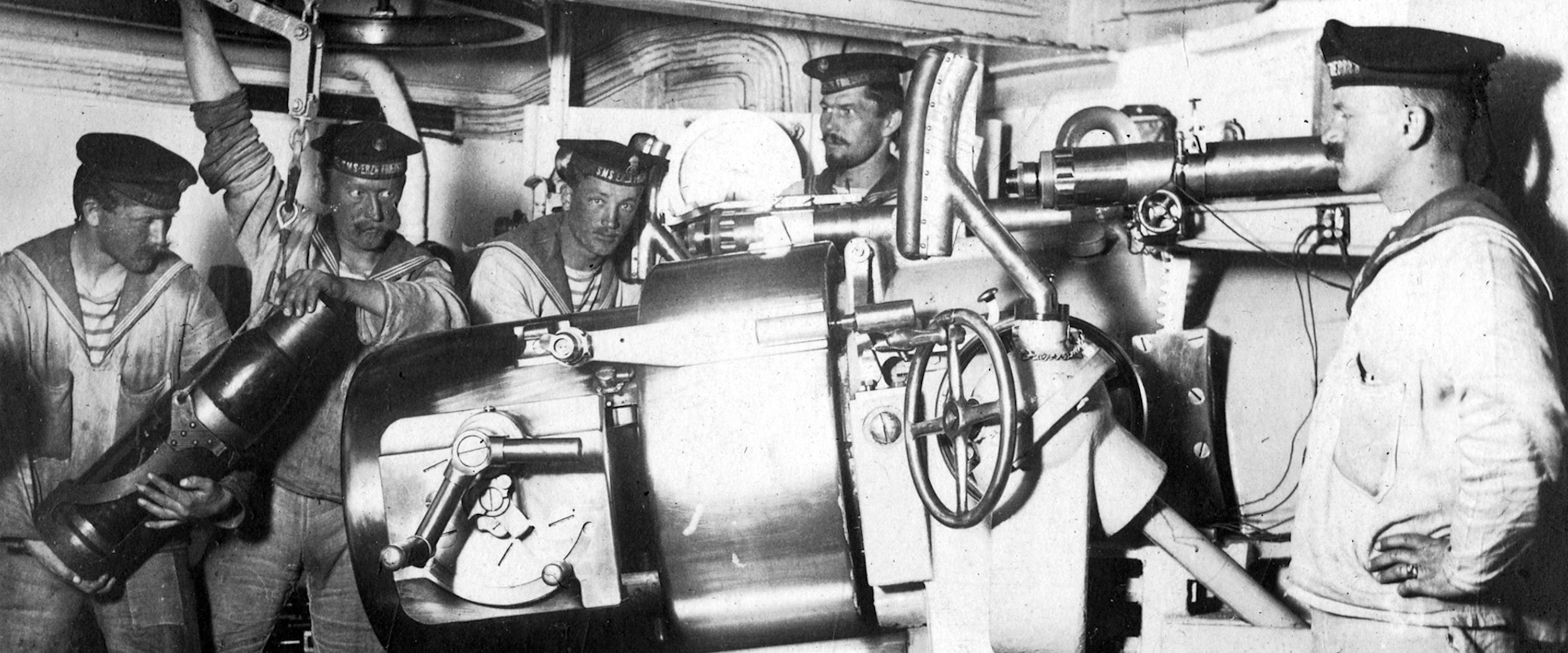
The soldiers from the Croatian provinces of Dalmatia, Istria and Međimurje, as well as Bosnia and Herzegovina, were included in the joint army as part of the 16th Corps, with its command headquarters in Dubrovnik, as part of the 3rd Corps headquartered in Graz (with recruits from Istria), and as part of the 5th Corps headquartered in Bratislava (with recruits from Međimurje). The conscripts from Dalmatia and Istria, besides joining the ground forces, also filled the crews of the Imperial and Royal War Navy (Kaiserliche und Königliche Kriegsmarine). More than 40 percent of the Austro-Hungarian Navy was made up of Croatian personnel. The navy’s main command, the Port Admiralty Command, was located in Pula. Because the Strait of Otranto was blocked by the Triple Entente, the combat actions of the Austro-Hungarian Navy were conducted exclusively in the Adriatic.
A significant number of Croats also served in the Austro-Hungarian Aviation Troops, which began organising as early as 1909, and which was commanded from 1911 until the end of the First World War by Milan Uzelac, hailing from Civil Croatia-Slavonia.
As a defensive measure, in the event of an enemy invasion into the territory of the Monarchy, the so-called People’s Uprising (Landsturm) was deployed in Croatia on July 31, 1914.
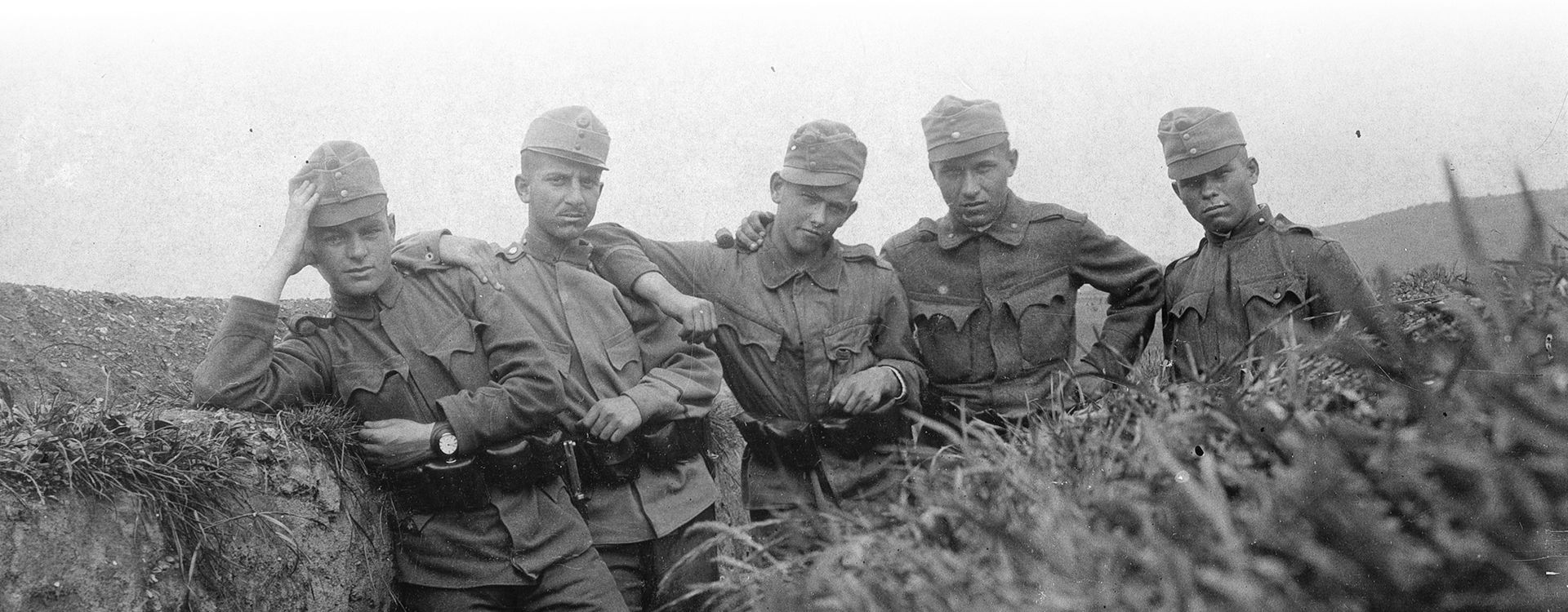
Soldiers from the Croatian provinces fought in the Balkans, Bukovina, Galicia and in the Italian battlegrounds (on the Soča River). Many were taken prisoner and many lost their lives. Toward the end of the war, a small portion fought in the volunteer units of the Kingdom of Serbia. During the first year of the war, Croatian units were concentrated in battlefields in the Balkans, but by the second year they could be found in many battlefields, although mostly in the eastern and Italian battlegrounds. In August 1914, they took part in the Battle of Cer in the Balkans, and the units of the 13th Corps fought on the northeastern slopes of Crni Vrh. In November 1914, Croatian soldiers fought in the Battle of Kolubara. In 1915, they were in action on the slopes of the Krn Mountains in the Italian battle area as well as in Galicia. In the east, Croats fought in the Battle of Lemberg, which was one of the most difficult and bloody in the war. The summer of 1916, they took part in the Brusilov offensive, facing the Russian army’s most successful operation of the First World War. It resulted in a large number of Croat soldiers ending up in Russian captivity.
The Dead and Wounded
There is no precise estimate in Croatian historiography of the number of Croats who took part in the First World War. Some estimates state that almost 700,000 Croats from the present-day area of Croatia (including Croats from other parts of the Lands of the Crown of Saint Stephen) were mobilised. From the population of the Triune Kingdom, 17.8 percent were mobilised, with 16.2 percent mobilised in Dalmatia and Istria. Whereas in the entire Austro-Hungarian Empire, 15.6 percent was mobilised.
The exact number of Croatian dead has not been determined. There were many challenges, including the problem of those who were listed as missing in the casualty lists (meaning, not officially declared dead) yet for whom there was also no confirmation from the Red Cross that they had been taken prisoner. Of those who fell into Russian captivity, all traces have been lost.
The military registers of fallen soldiers were kept by military priests or, in case of their absence, by unit commanders. The lists were forwarded to the Apostolic Military Pastoral Care in Vienna. However, the lists of killed/deceased soldiers in the registry books are not complete, since registration of the dead required the confirmation of a doctor, a priest, or two comrades-in-arms, which was not always possible.
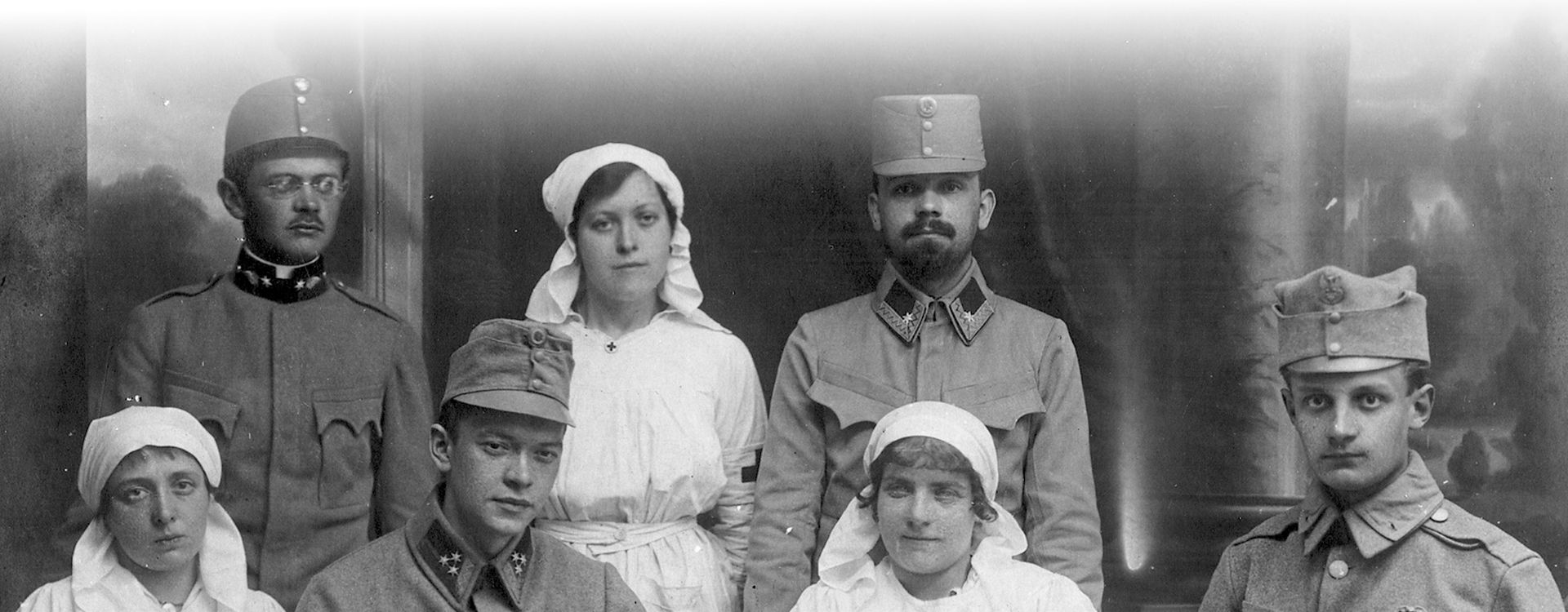
The care for wounded and sick soldiers was, by Imperial decree, the sole responsibility of the Red Cross. During the war, around fifty branches of the Croatian/Slavonian Red Cross operated in Croatia in thirty-five military hospitals that received sick and wounded soldiers. In addition to the professional and expert medical personnel, volunteer nurses worked at the hospitals. The Red Cross was the organiser of numerous fundraising campaigns. Everything was collected: money, food, cigarettes, clothes, shoes, bedding, medical supplies and so on. Even children in schools collected money and food for soldiers on the battlefields.
During the war, the tradition of issuing war insurance — which dates back to the nineteenth century — continued in the Austro-Hungarian Empire. It was aimed at treating and educating disabled veterans as well as preventing the impoverishment of the families of fallen soldiers.
With the increase in the number of Croatian soldiers killed on the battlefields, especially during the twelve battles on the Soča River in the Italian battle area and also during the Brusilov offensive, construction began of monuments to the fallen. The Imperial and Royal Military Command in Zagreb ordered the construction of military cemeteries.
The Economy, Everyday Life and Humanitarian Work under Wartime Conditions
At the beginning of the war, a state of emergency was declared throughout the Monarchy that limited the civil and political rights of the population. Political and military censorship, bans on rallies and the work of civil societies, as well as restrictions on movement were put in place. In addition, authorities called for the reporting of suspicious individuals with the aim of preventing hostile attacks within the Monarchy. Due to the war, the Serbian and later the Italian populations were persecuted.
Although Croatian provinces (except Syrmia) were not directly involved in the war’s operations, the civilian population was strongly impacted, which affected its overall political, social, economic and cultural life. The consequences of the war were felt in the great loss of human life and in the economy that was on the verge of collapse. The mobilisation of men and the wartime conditions resulted in the inclusion of women in the workforce. They became a major economic force by filling job vacancies in sectors previously reserved for men. By taking positions previously held by men, women became aware of their changing status, their abilities and their role in society. They also acquired new skills and knowledge.
While soldiers were killed on the battlefields, back home civilians faced food, clothing and energy shortages often on a daily basis. Due to the hunger, poverty and economic problems brought on by the war, the number of charity organisations carrying out humanitarian, social and voluntary work in Zagreb increased. An umbrella alliance of voluntary societies, the Central National Committee for the Protection of the Families of Mobilised and Killed Soldiers from the Kingdoms of Croatia and Slavonia, was founded in September 1914. It was later renamed Civil Protection. Through its member organisations, it coordinated the entirety of the social and voluntary charity work in Croatia. The committee’s main goal was to provide assistance to the most vulnerable of the war victims: the wives, widows and children of Croatian soldiers, followed by war orphans and other impoverished citizens. A number of prominent figures from Croatia’s cultural, political, economic and religious spheres were involved in the committee. The majority of the committee’s activity concerned the relocation and temporary adoption of children from Dalmatia, Istria, Lika, Gorski Kotar, the Slovenian Littoral and Bosnia and Herzegovina. The children were relocated to rural-based families in the richer northern regions of Croatia, primarily Slavonia and Syrmia, as well as to southeastern Hungary (today’s Baranja, Bačka and Banat). “Save the children” was the motto of the humanitarian action organised in 1917. By setting up exhibitions, balls, concerts, parties, sporting events, or raffles, or by selling objects related to war, significant funds were raised to supply soldiers on the battlefields.
One well-known charity society was the Zagreb Ladies’ Committee for Wartime Aid, founded in August 1914. It organised various activities with the aim of raising funds, which were then distributed to war-endangered families, especially the widows and children of fallen soldiers. A humanitarian action The Iron Knight (Wermann im Eisen) initiated in Vienna soon spread to the other cities of the Monarchy. In May 1915, the committee organised an action named The Linden Memorial, whereby passers-by could drive nails into the trunk of a linden tree. One crown was charged for each nail and the opportunity to write in a memorial book. The action spread to several other Croatian cities.
In 1914, the League for the Protection of Children was founded with the aim to care for children in wartime conditions, especially those of fallen soldiers. In 1915, the Croatian Ladies’ Association for the Civil Home for Infirm Croatian Soldiers, or the Croatian Zita Home, was founded to build a home for the disabled veterans of the Kingdoms of Croatia and Slavonia. With other humanitarian organisations in Zagreb, the Croatian Zita Home organised cultural events, the proceeds from which were to feed the poor families of mobilised soldiers or of men who had been killed or disabled in the war. Almost all cultural and sports events in Zagreb — plays, concerts, lectures and exhibitions — were directed toward humanitarian causes.
The economy was much weakened during the war. With no end to the war in sight, measures were introduced to control the sale of goods, especially food, and the population was called upon to spend rationally. The massive cost of the war and the adjustment of the entire economy to wartime conditions resulted in inflation and food shortages. In addition to requisition — the forced selling of food — a set-price supply system was introduced, which meant that food would be bought at guaranteed prices through coupons. By setting the upper limit that could be charged for bread, potatoes, sugar and other basic foodstuffs, the state tried to prevent the creation of a black market in food. Prisoners of war were used at farms and factories in Austria-Hungary as free labour.
As Croatia’s peacetime industry adapted to the needs of war, there was a lack of raw materials (brass, nickel, tin, copper, etc.), both for military needs and for mass consumption. Authorities called on the population to donate items made of these metals, such as church bells, boilers, pots, candlesticks, pans and so on, for reuse for military purposes. Churches were especially endangered by the requisition because their bells were made of bronze, which was suitable for making cannons.
Poverty and famine facilitated the spread of infectious diseases, most commonly cholera, dysentery, typhus, malaria and, by the end of the war, the Spanish flu. These diseases claimed many lives. Therefore, civil authorities warned Croatians about the importance of prevention and maintaining hygiene.
Political Aspirations and Leaving the Austro-Hungarian Empire
In the political sphere, Croatian nationalist politicians Ante Trumbić, Frano Supilo, Ivan Meštrović and Hinko Hinković set out to create the South Slavic state. At the beginning of the war, they fled abroad and in mid-1915 founded the Yugoslav Committee, with Ante Trumbić as its president. The committee’s goal was to break up the Austro-Hungarian Empire and create a democratic South Slavic community that would unit Slovenes, Croats and Serbs across their entire ethnographic territory into a fully sovereign state. The Yugoslav Committee was based in London during the war and also had offices in Paris, Geneva, St. Petersburg, as well as in North and South America. From these locations it maintained strong diplomatic ties with other governments and prominent individuals. The Yugoslav Committee also worked intensively with the Yugoslav National Defence, an organisation of expatriates in South America who financially supported the committee.
Following this work, on October 5, 1918, the National Council of Slovenes, Croats and Serbs was founded in Zagreb. On October 9, it was empowered by a Declaration, agreed to by all national parties and groups, to take control of all political activities. The National Council thus became the supreme political representative of Slovenes, Croats and Serbs living in Croatia, Slavonia, Rijeka, Istria, Dalmatia, Međimurje, Bačka, Banat, Baranja, Bosnia and Herzegovina, Trieste, Carniola, Gorizia, Styria, Carinthia and other parts of southwestern Hungary.
The Croatian Parliament, at its October 29, 1918 session, adopted and confirmed the proposal of the National Council of Slovenes, Croats and Serbs to terminate all state and legal relations between the Kingdom of Hungary and the Empire of Austria and the Kingdom of Croatia, Slavonia and Dalmatia. This established the State of Slovenes, Croats and Serbs. Elected as leaders of the National Council of Slovenes, Croats and Serbs were Antun Korošec as president, Ante Pavelić Sr. and Svetozar Pribičević as vice-presidents and Srđan Budisavljević, Ivan Lorković and Mate Drinković as secretaries. This ended the 391-year period of Croatian provinces being under Habsburg rule.
Conclusion
The Great War completely changed the picture of the previous world. This first significant world conflict also altered the political order concerning Croatian countries. As only one of the components of the Austro-Hungarian Monarchy, Croatia neither had much influence on the war, nor was it practical to stand and fight for its own interests. Croatia’s war-impoverished economy, military casualties, civilian casualties from hunger and disease, especially from the Spanish Flu, and its inability to act politically led to changes toward the war’s end. As the Austro-Hungarian Monarchy disintegrated, a new state of South Slavic peoples was created, of which Croatia became a part. Thus, the First World War determined a new direction in Croatian history.
The Croatian State Archives, Zagreb - 2022