Canada and the First World War
Canada’s history is steeped with the successes and hardships of its First World War soldiers. It was a remarkable episode in our history.
War broke out in 1914, a time of intense nationalism among Europe’s imperial powers. What started as an isolated assassination, in Sarajevo of the Austrian Archduke Ferdinand in June 1914, triggered a chain reaction in the world of international alliances. Within months Germany, France, Great Britain, Russia, Belgium, the Austro-Hungarian Empire, Canada, Australia, South Africa, British India, New Zealand, the Dominion of Newfoundland, Greece and others were all at war.
The fighting soon reached a scale beyond what anyone could have imagined. The conflict spread to so many regions of the world that it eventually became known as the Great War. Fighting of such magnitude and of such relentlessness had never been seen. By November 11, 1918 when the final gun fell silent, 9.5 million people had been killed, and the lines of battle on the Western Front in Europe were essentially back to where they had begun. Canada was a small nation of less than eight million in 1914, and 68,000 never returned from the war.
In 1919 the Paris Peace Conference drew up treaties and redrew borders that, in many instances, revived national tensions. Today we still live with some of the political consequences of those decisions. The Paris Peace Conference also decided on reparations, or economic punishment, for a defeated Germany so that the ‘enemy’ would pay for the death and destruction that it had wrought.
At the Peace Conference, the American President Woodrow Wilson was insistent that an international organization be established to prevent future conflicts, and the League of Nations, the forerunner to the United Nations, was created. But ingrained nationalisms meant that the League of Nations received inadequate support. The fledgling international organization was unable to help prevent the next war in 1939, the Second World War, that killed more than 60 million. The United Nations was founded in 1946.
The experience of the First World War helped bring about social changes. The war further eroded Europe’s historic class system. The Imperial War Graves Commission was created to bury the more than 1.1 million dead from the British Commonwealth countries. The Commission decided that officers and ordinary soldiers would be buried side by side in the same cemeteries. This had rarely been done before. Officers had traditionally been from the ruling classes, and even in death they had been given special privileges. In the name of equality, the Commission also decided that officers would not be allowed special grave monuments but instead would share the same headstone design as all other soldiers. The completion of the cemeteries took years, even decades, and Canada still contributes to maintaining them.
On returning home, many veterans, having fought for freedom abroad, felt they could ask for better wages and working conditions at home. Many engaged in labour activism and the union movement. In 1919 many veterans took part in the Winnipeg General Strike. Tragically, in the violence that followed in the Winnipeg streets, there were veterans on opposing sides. There is no doubt that the Russian Revolution of 1917 and the Communist dream of an ideal world also contributed to the general agitation. There was also no doubt that the drive for labour rights and social equality was widespread.
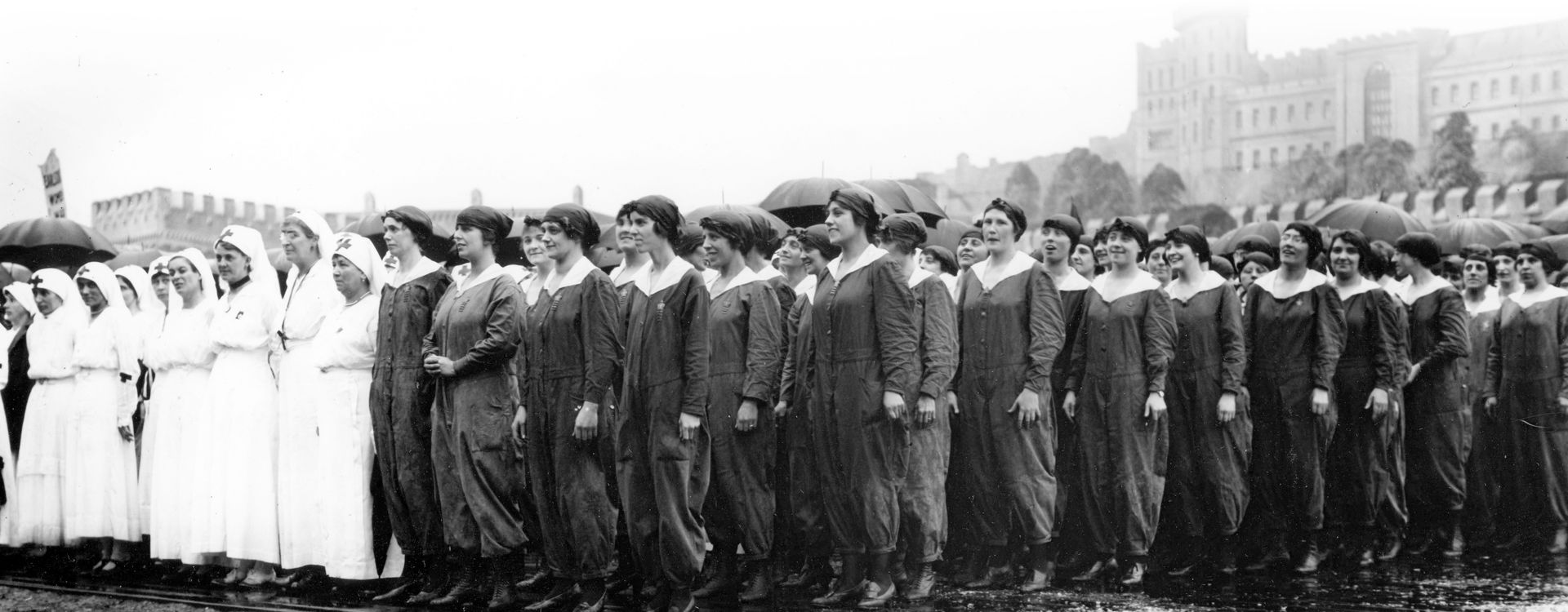
Canadian women, having contributed to the labour force during the war when so many men had been absent, for the most part got the vote federally in 1919. Indigenous warriors achieved a degree of equality when they served in the Canadian Expeditionary Force that they were not given when they returned home. Many minority groups, having fought for Canada abroad, returned to discriminatory conditions at home that would not be rectified for a long time. For example, Japanese Canadian veterans, even though they had fought bravely, only received the right to vote in British Columbia in 1931 and were not given full Canadian citizenship until 1949. Many francophone Quebecers had ambivalent feelings about the fighting in Europe, and when the Canadian government brought in conscription in 1917 there was resentment and discord.
It is said that Canada emerged as a more confident nation after the First World War. Its soldiers had earned respect on the battlefield, particularly at Vimy Ridge, Passchendaele and in the Hundred Days campaign. Sir Arthur Currie, a Canadian who rose to command the Canadian Corps, became a symbol of an emerging Canadian independence. Canada was given a separate seat at the Paris Peace Conference as an independent nation, rather than just as a member of the British Empire.
We encourage you to explore the diversity of Canadian history both during the war and in the years that followed. Canadian soldiers fought hard for their young nation, earning respect both internationally and at home. Of the 68,000 Canadian names shown in this project, 3,485 are the names of men who returned but did not survive their wounds. Across Canada, military funerals went on into the 1920s and 1930s as veterans continued to die from war-related causes.
We must also reflect on Canadian troops who still return from wars not just with physical wounds but also with mental wounds. How many of the returning veterans in 1918 were either unable to cope, and ended their own lives, or else lived on, unable to adjust to normal life? A son of a Canadian veteran told us how as children, they had seen their father struggle with his memories: “My dad fought the First World War for the rest of his life. Two or three times a week, my brother and I had to go into his room and jump on his chest to wake him up.”
In the long, cruel economic depression of the 1930s, how many of the unemployed and homeless, often labelled as tramps or hobos, were in fact former soldiers? It is interesting to note that returning First World War veterans were often critical of war — and yet many didn’t hesitate to sign up again in 1939 when the Second World War broke out.
Perhaps our nation’s most significant tribute to the 1914–1918 dead was the construction of the Vimy Memorial in France. Not completed until eighteen years after the war, and subject to complaints of overspending, the memorial is now world-renowned. Toronto sculptor Walter Allward surprised Canadians with his design’s soaring towers and the power of the brooding figure of Mother Canada mourning her sons. The Vimy Memorial, crowned with the figure of Peace, is a timeless and iconic Canadian achievement both as a work of art and as a memorial.
No First World War soldier remains alive today. The last Canadian veteran died at age 109 in 2009, and therefore the book of living history is shut forever. What are left are the photos, the archives, the letters and a few recordings of old veterans’ voices when Canada finally asked them what they felt about their war. We must neither forget them nor the war they fought. The earth of Belgium and France has not forgotten. The battles of Passchendaele, the Somme and Verdun were so intense and prolonged that more than 100,000 bodies were never recovered. Every spring, soldiers’ remains still surface in the fields of France and Belgium and are gathered for burial in some of the 6,000 war cemeteries. We, too, must not forget since history binds us to them. The families and descendants of these 68,000 Canadians must know that they are remembered in our nation’s history, and in our hearts.
The Canada of today is not the Canada of 1914. Successive waves of immigration have brought people from all lands and all cultures to join our nation. The World Remembers is determined that the spirit of inclusiveness that binds Canada together today will be reflected in the respect given to every name from every nation that is displayed in this project.
R. H. Thomson, The World Remembers
For further information on Canadians in the First World War please visit the Virtual War Memorial at www.vac-acc.gc.ca or go to