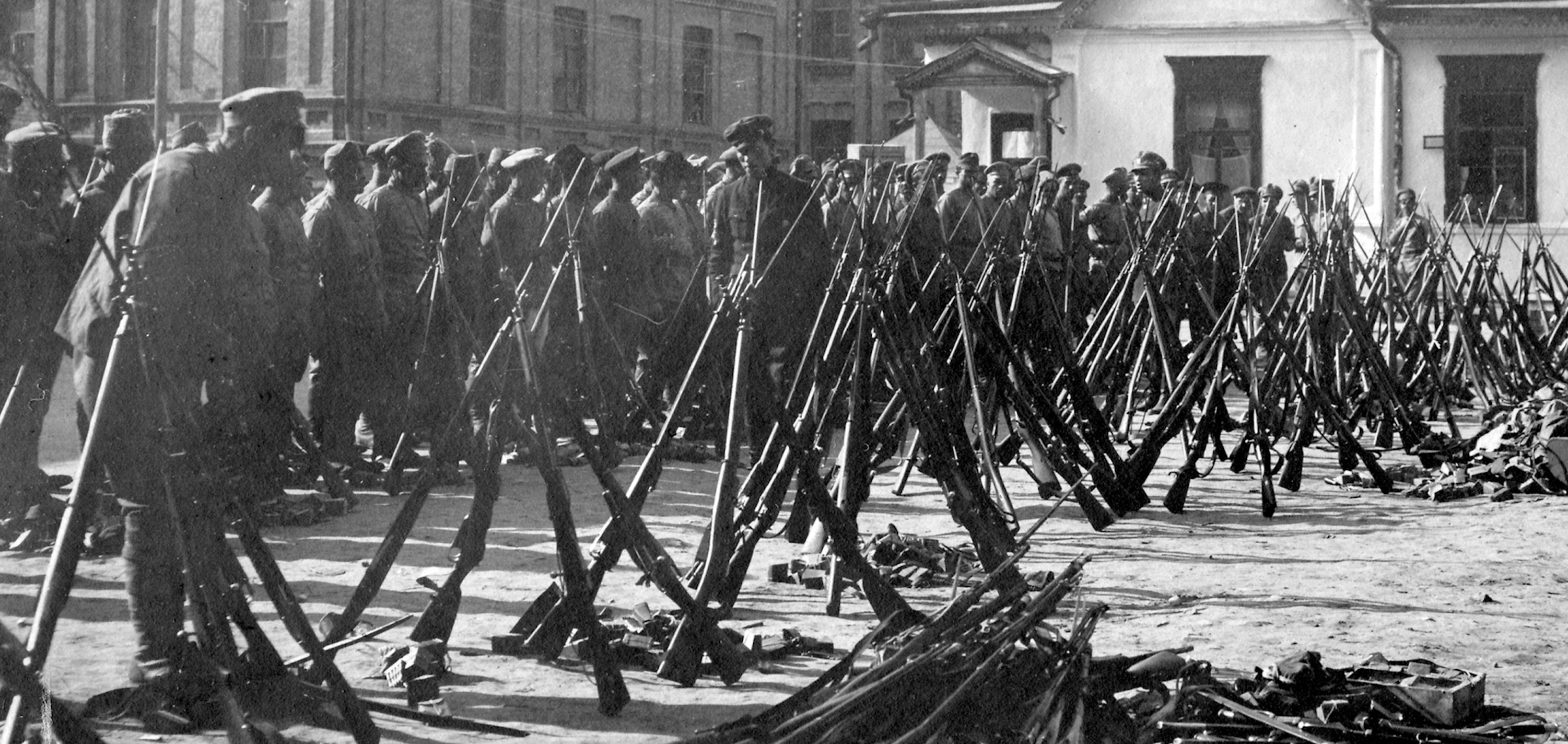
Ukraine and the First World War
During the First World War, the territory of present-day Ukraine was divided, as it had been for over a century and a half, between the Russian Empire and the Austro-Hungarian Empire. This meant that at the outset of the twentieth century all Ukrainians were citizens, or more properly subjects, of either the Tsar of Russia (Nicholas II) or the emperor of Austria-Hungary (Franz Joseph I).
Those parts of present-day Ukraine that were in the Russian Empire were administratively divided into imperial provinces (guberniia), in nine of which Ukrainians (then known as ‘Little Russians’) formed the majority of the population. In those parts of Ukraine that were in the Austro-Hungarian Empire, Ukrainians (then known as Ruthenians) inhabited three areas: parts of the Austrian provinces of Galicia and Bukovina, as well as several counties in northeastern Hungary (present-day Transcarpathia).
As subjects of the Russian Tsar and Austrian Emperor, Ukrainian males were drafted into the armies of each empire. In the case of the Austro-Hungarian Empire, most draftees served in various units of the imperial army. There were, however, more than 2,500 soldiers who formed part of a unit — known as the Ukrainian Sich Riflemen — that fought on the side of Austria-Hungary throughout the war. Austria-Hungary, together with the German and Ottoman empires, was a leading member of the Central Powers, but Tsarist Russia was allied with Great Britain and France. This meant that many Ukrainians fought against each other because they were under the banner of opposing states and as national minorities they had no control over their destiny.
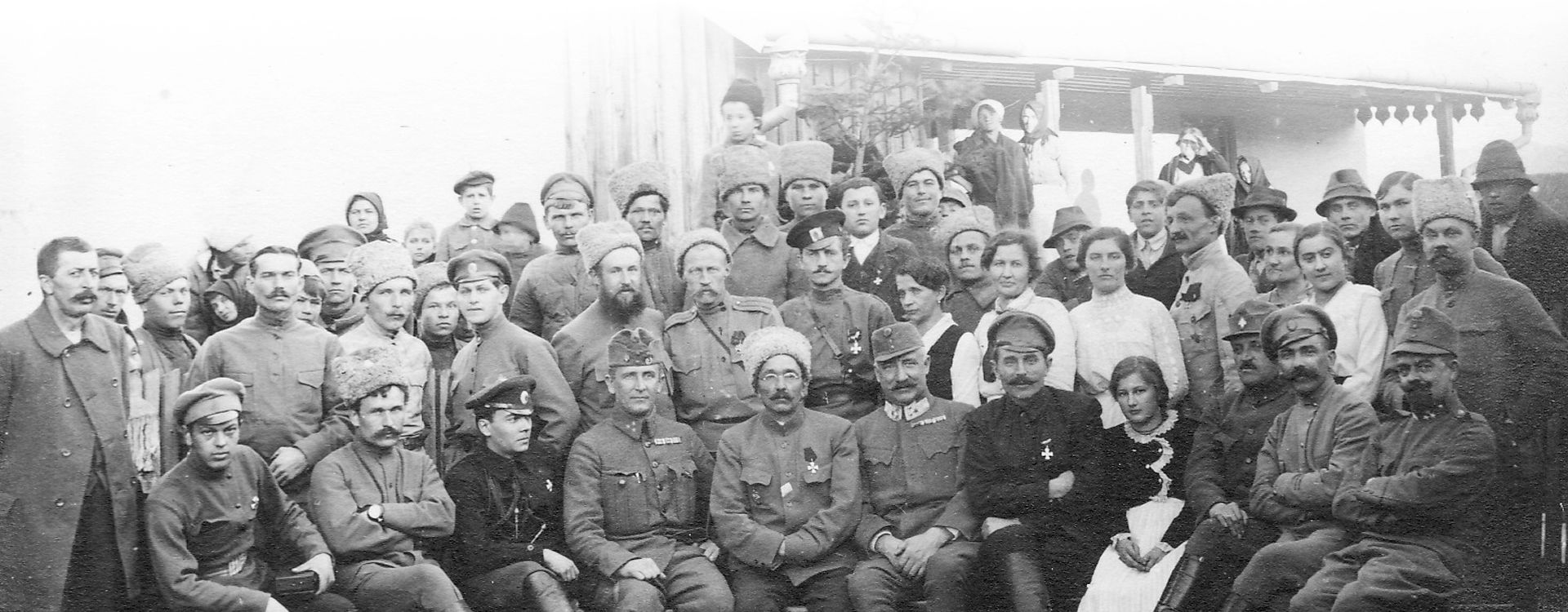
Most of the bloody battles in which Ukrainian soldiers fought on both sides took place along the Eastern Front, which ran from the Baltic Sea in the north to the Carpathian Mountains (present-day Romania) in the south. The first clashes along the Eastern Front began at the outset of the war in August 1914, and were to continue with varying intensity until Russia (by then under Bolshevik rule) dropped out of the conflict in December 1917.
There were two main theatres of war on the Eastern Front. The first was along the German-Russian border, which ran through the heart of what is present-day Poland. Among the most costly battles in that theatre were two that occurred at Tannenberg. The second theatre was along Russia’s border with Austria-Hungary, which ran through what is present-day southeastern Poland, western Ukraine, and Romania. Major battles in that second theatre took place at Limanowa and Gorlice-Tarnów, as well as during the so-called Winter War of 1914–1915 in the Carpathians, and Tsarist Russia’s Brusilov Offensive of 1916.
The number of combatants and casualties along the Eastern Front equalled or surpassed the losses on the Western Front. For example, the four-month campaign of the Carpathian Winter War, which took place along the borderlands of present-day Poland, Ukraine and Slovakia, resulted in one million dead and wounded on the Russian side and 800,000 on the Austro-Hungarian side. Such disastrous figures surpassed the better-known battles of Verdun and the Somme on the Western Front.
The Russian Empire started off the war with over 15 million soldiers. The initial high losses in 1914 and 1915 were covered by an ongoing draft throughout the war years. Of the estimated 2.9 million soldiers from the Russian Empire’s Ukrainian-inhabited provinces, an estimated 450,000 were killed or died from wounds and diseases. As for soldiers from Ruthenian/Ukrainian-inhabited lands in the Austro-Hungarian Empire, an estimated 120,000 perished.
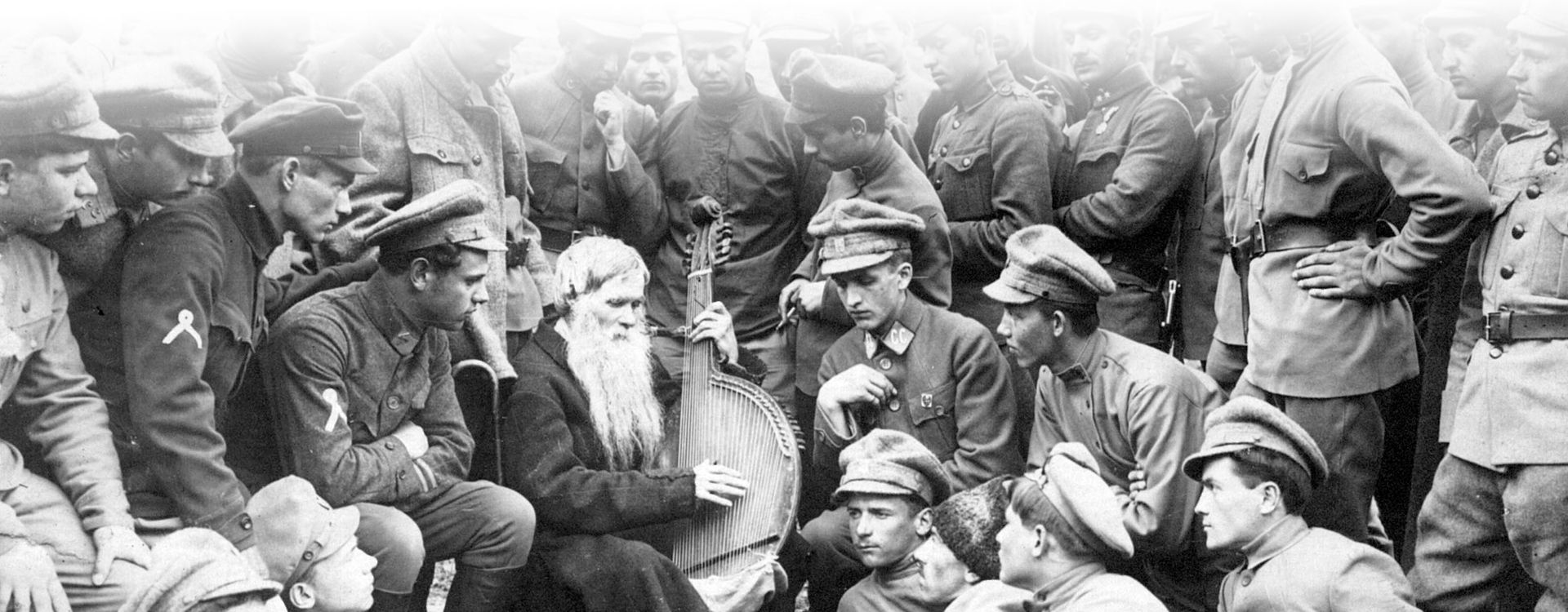
Nor were military personnel the only casualties during the First World War. Since much of the Eastern Front ran through present-day western Ukraine, civilians there also suffered extensively. No fewer than 1.3 million Ukrainian men, women and children from both empires died prematurely during the war, in particular from disease, epidemics and wartime food shortages.
Even after the Eastern Front ceased to exist at the end of 1917, conflict continued. As the war came to an end, Ukrainians hoped to gain their independence. In 1917 they created the Ukrainian National Republic from territory in the former Russian Empire and in 1918 the West Ukrainian National Republic from territory in the former Austro-Hungarian Empire. Each of the Ukrainian republics had armies comprised largely of First World War veterans. Their efforts to secure independence were challenged, so that during the next three years, until 1920, Ukrainian lands were wracked by German and Austro-Hungarian occupation, invasion by both Bolshevik Red and anti-Bolshevik White armies as part of Russia’s brutal civil war, not to mention a Polish-Ukrainian war and a Polish-Soviet war. Ukrainians fought and died on all sides in these post-war conflicts, as did another 2.3 million civilians killed on lands that comprise present-day Ukraine.
Paul Robert Magocsi, University of Toronto