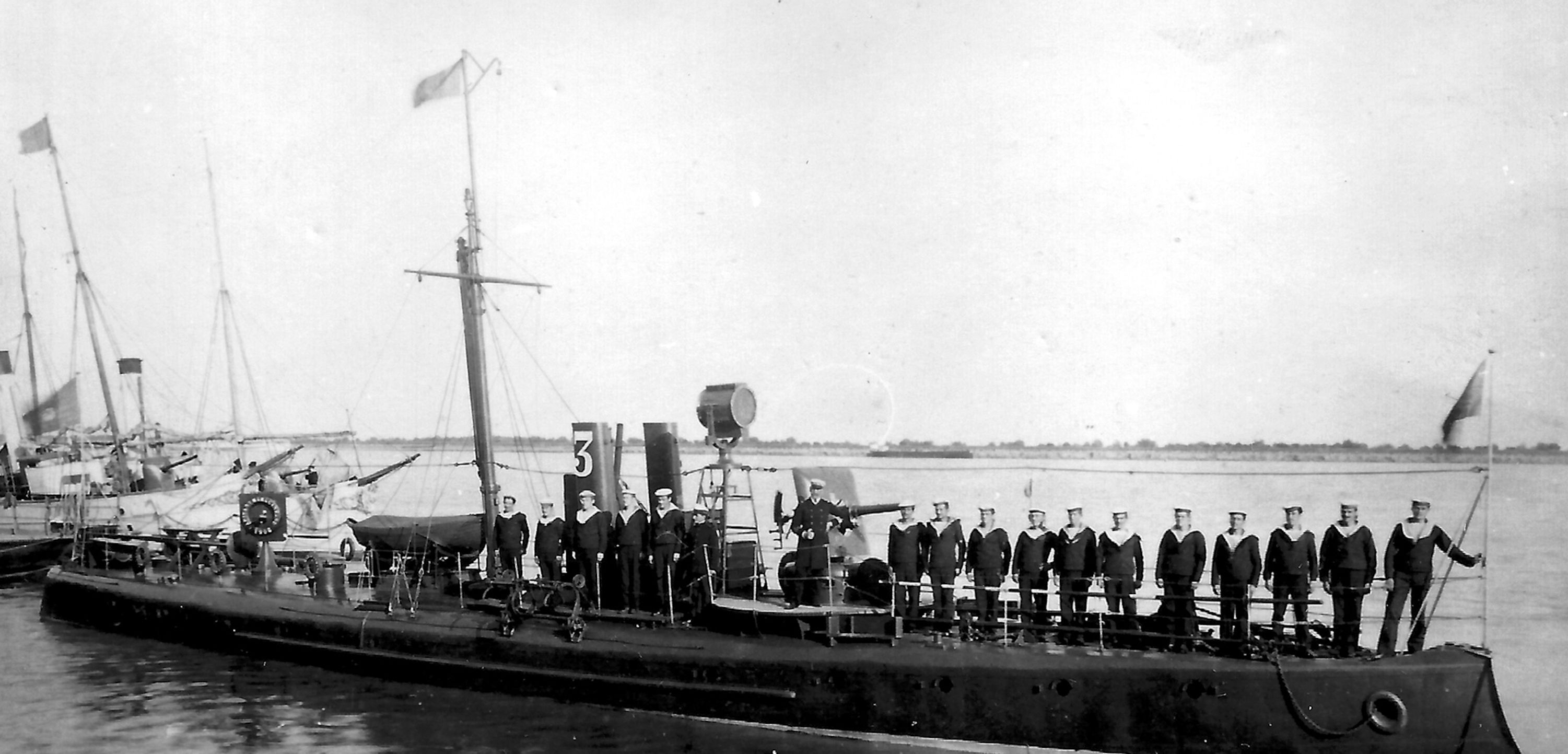
Romania and the First World War
Prelude
On July 28, 1914 Austria-Hungary declared war on Serbia, setting in motion a chain of events that soon led to the outbreak of global war. In the summer of 1914, Romania was part of the Triple Alliance, the result of a secret treaty concluded on October 30, 1883 with Germany and Austria-Hungary. The treaty terms included an agreement that Romania would go to war should Austria-Hungary be attacked. Romania considered the treaty its best option in guaranteeing their defense against Russia.
To prevent a possible negative public reaction, the treaty was known only to King Carol I of Romania, Prime Minister Ion I.C. Brătianu and a small group of political allies. Public opinion opposed any rapprochement with Austria-Hungary due to the discrimination experienced by the Romanian population in Transylvania, which was then part of the Austro-Hungarian Empire. In addition, most of the political class as well as the public felt a special affinity toward the Western powers, and to France in particular — another reason for the secrecy surrounding the treaty.
In accordance with the terms of the alliance, each signatory agreed to mutually support the others in the event of an attack. Since the treaty did not stipulate anything regarding an aggression initiated by one of its own parties, its clauses were not valid in the case of Austria-Hungary’s attack on Serbia in 1914. Because of this, Romania was not obliged to attack Serbia, or any other state that Germany or Austria-Hungary might have considered attacking on the eve of the First World War.
At the outbreak of war in 1914, the Entente Powers (France, United Kingdom, Russia and later Italy, Japan and the United States) wanted Romania to align with their cause, in particular because of the country’s strategic positioning and the natural and human resources at its disposal. The visit to Romania of Tsar Nicholas II and Russian Foreign Minister Sergei Sazonov at the beginning of June 1914 marked the rapprochement with the Entente at a time when Austria-Hungary was trying to regain Romania’s sympathy following an estrangement brought on by the systematic policy of persecution and denationalization applied to Romanians living within the territories of Austria-Hungary.
Decisions Made at the Outbreak of War
On August 3, 1914 the Crown Council of Romania was convened to decide its future direction in the war. At this time, King Carol I presented the text of the 1883 Austro-Romanian treaty that had previously been kept secret and argued that Romania must support the Central Powers and respect its treaty commitments. While support for an alliance with the Central Powers was limited, those who favoured it feared what a Russian victory would mean for the existence of the Romanian state. It was thought that an Entente victory could lead to Russian control over the Black Sea straits, which for Romania would be equivalent to the loss of independence. In addition, they saw an alliance with the Central Powers as a chance for the liberation of Bessarabia from Russian domination.
The king’s position was not, however, shared by the majority of Romanians. Politicians and public opinion mainly supported the Entente. The fundamental objective of support for the Entente was the liberation of Romanians from Austro-Hungarian rule in Transylvania, Banat and Bucovina. Romanian national unity became the mobilizing cause that marked the overall orientation of the political class and public opinion in the context of the outbreak of hostilities.
In the end, a majority of the council members favoured neutrality while taking all measures to defend Romania’s borders. The decision to remain neutral was a blow to the Central Powers, who hoped that Romania’s participation would extend the Eastern Front and put additional pressure on Russia while ensuring the supply of grain and oil needed to support the German war effort. For Russia, Romania’s decision to remain neutral hindered plans to launch an offensive in Transylvania with the Romanian army, thereby assisting Serbia. It was believed by the Russians that Romania’s early military engagement could have significantly changed the configuration of the war in the Balkans in favour of the Entente Powers.
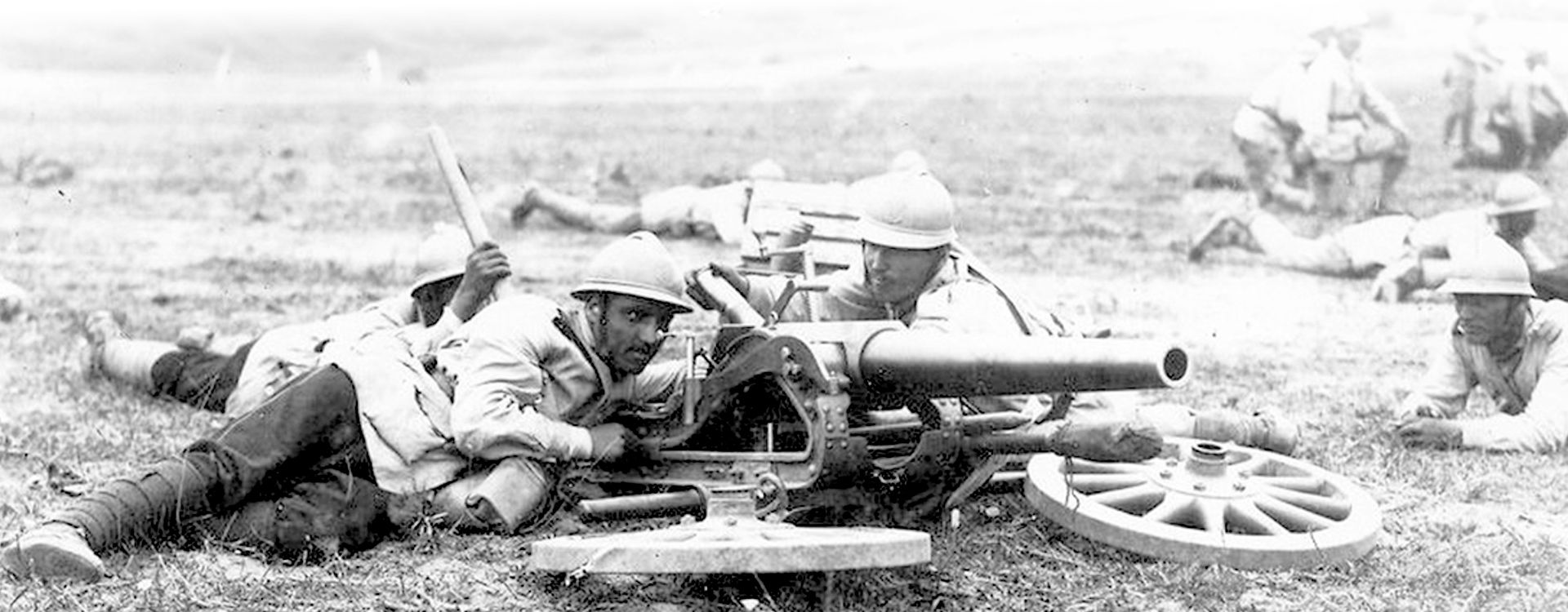
Romanians in the Austro-Hungarian Empire
Romanians who resided in provinces within the Austro-Hungarian Empire, as well as those from Bessarabia, took part in the war from its outset in 1914 because they were enlisted by the Austro-Hungarian and Russian imperial armies. Authorities in Austria-Hungary had tried to ensure the loyalty of the Romanians living in their territories through various concessions, but some Romanians travelled to Romania to enlist in the Romanian army. During the war, Romanian prisoners from Transylvania and Bucovina who had been captured by Russian, French and Italian armies would later form a volunteer corps, and some would be integrated into the Romanian army proper — for example, those from Russia.
The Years of Neutrality, 1914-1915
Throughout 1914 and 1915, the National Liberal Party, under the leadership of Brătianu, prepared to enter the war through negotiations with the representatives of the Entente and by supplementing stocks of armaments and ammunition with imports from France and Italy. The postponement of joining the conflict was a result of both needing to obtain the most favourable conditions and the insufficient training and equipment of the army.
On September 28, 1914 Romania signed a secret agreement with Italy ensuring they would end their neutrality only through mutual consultation with each other. The agreement was aimed at protecting each country’s national interest against larger powers, in particular the Austro-Hungarian Empire. On October 1, 1914 another agreement was concluded in Petrograd by which Russia, in exchange for a benevolent neutrality, recognized Romania’s rights over the provinces of Austria-Hungary with majority Romanian populations.
During the first two years of the war, diplomatic representatives from both the Entente and the Central Powers made interventions hoping to influence Romania’s decision on wartime engagement. Ion I.C. Brătianu, although a supporter of an alliance with the Entente, postponed any final decision until France, United Kingdom, Russia and Italy promised to fully satisfy Romania’s demands regarding the conditions of their engagement and the territories they could claim from Austria-Hungary. The negotiations with France and Russia evolved depending on the situation on the Western and Eastern Fronts. For example, only when the prolonged fighting at Verdun forced France to look for ways to weaken the German pressure did the Entente fully accept Romania’s conditions. The situation was further complicated by Bulgaria’s accession to the Central Powers on October 11, 1915, which blocked the easiest route of supply to Romania. This meant delays in the endowment program for the Romanian army.
The Treaty of Bucharest, 1916
On August 17, 1916 the Treaty of Bucharest and Military Convention between Romania and the Entente Powers was secretly signed in Bucharest. It stipulated that the Romanian army’s main offensive should be in Transylvania against Austria-Hungary. The agreement also stipulated the provision of substantial aid, ammunition and war material to Romania, and that at the end of the war, Romania’s rights over the provinces within the Austro-Hungarian Empire that were inhabited by ethnic Romanians were to be recognized — in other words, Romanian national unity would be achieved. On August 27, 1916 the Crown Council of Romania approved the treaty and the convention. King Ferdinand I, who had succeeded King Carol I who had died in October 1914, in accordance with Romania’s national interest, did not hesitate to accept the terms of the treaty and convention, in spite of the fact that he himself was a member of the German Hohenzollern dynasty. An important role in Romania’s orientation toward the Entente was also played by Queen Marie of Romania, who was linked through close family relations with the Royal Houses of Great Britain and Russia.
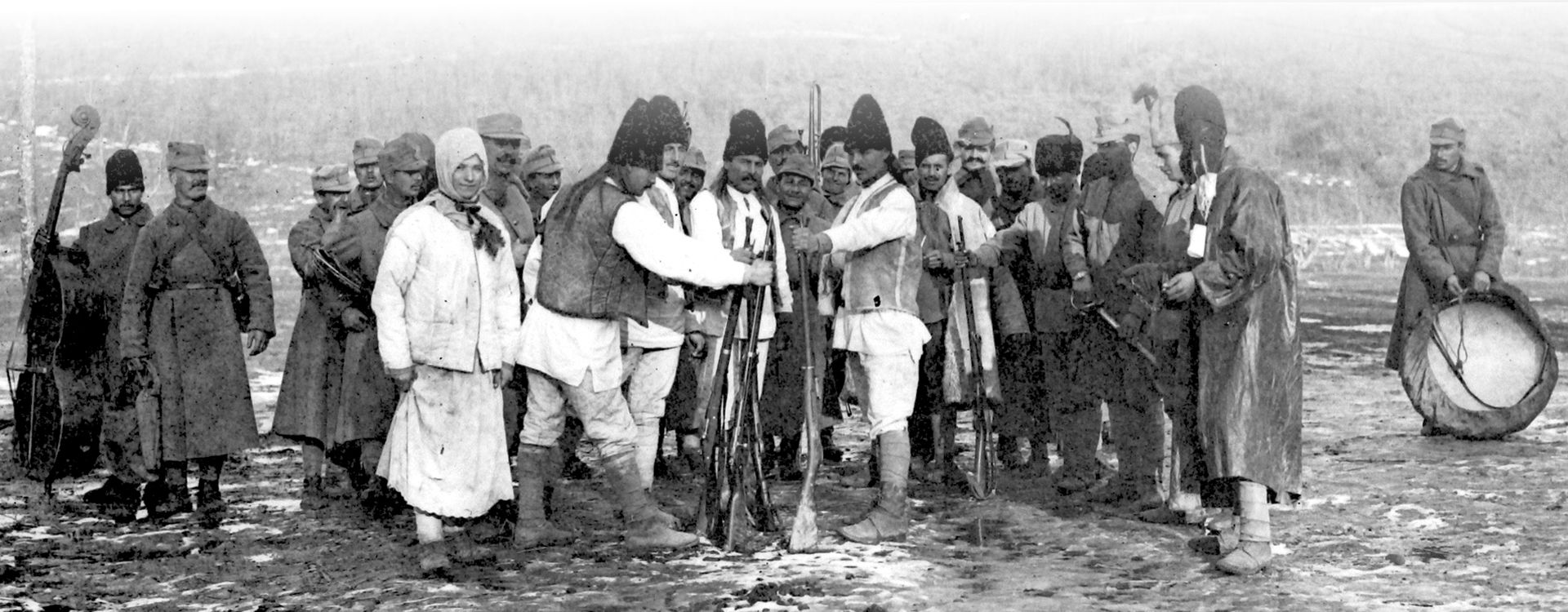
The Summer and Autumn Campaigns of 1916
On the night of August 27, 1916 Romania’s declaration of war was presented in Vienna; and after a few hours, according to the “Hypothesis Z” plan, offensives began in seventeen directions through the passes of the Southern and Eastern Carpathian Mountains. The 1st, 2nd and Northern Armies — commanded by General Ioan Culcer, General Alexandru Averescu and General Constantin Prezan, respectively — were engaged on the Transylvanian front with 420,000 soldiers. The defense on the Southern Front was provided by 140,000 soldiers of the 3rd Army, commanded by General Mihail Aslan. While the military convention signed by Romania provided for the simultaneous launch of a French-English offensive on the Thessaloniki front (Macedonia), this did not happen. Furthermore, Russia contributed fewer troops than promised to the front in Dobrogea (Bulgaria), instead choosing to focus their attention on the capture of Bucovina in an offensive led by Russia’s General Brusilov.
During the initial three weeks of Romania’s involvement in the First World War, the 1st, 2nd and Northern Armies advanced rapidly in Transylvania, taking advantage of already reduced Austro-Hungarian forces. However, the Romanian advance toward the Mureș line, a more easily defended position, was stopped due to the serious defeat at the Battle of Turtucaia on September 6, 1916. German and Bulgarian forces, commanded by Field Marshal August von Mackensen, then advanced into Dobrogea but were stopped on the Rasova-Cobadin-Topraisar alignment on September 21, 1916. Romania’s offensive in Transylvania ended on October 1, 1916, after the battle of Sibiu. The German 9th Army, commanded by General Erich von Falkenhayn, managed to regain control over the entrance to the Olt Gorge. Romanian General Averescu failed in his attempt to encircle the Bulgarian-German forces south of the Danube at the same time as a Russian offensive in the south of Dobrogea — the Flămanda manoeuvre, October 5, 1916.
Defeats in 1916 and the Occupation of Bucharest
The changes in the plan that redirected the main effort toward the Southern Front caused the loss of territory previously gained in southern Transylvania. While the Jiu, Rucăr-Bran, Predeal, Buzău and Oituz passes were defended with great effort throughout October and November 1916, the intense pressure exerted by enemy forces from the north and south resulted in the withdrawal of Romanian troops from these passes and the withdrawal to the east of the 2nd Army. Between November 29 and December 3, 1916, a plan was organized to attempt to encircle the German 217th Division that was approaching Bucharest. However, this failed when the enemy learned of the plan and was able to thwart the manoeuvring of the group commanded by General Constantin Prezan during the Battle of Neajlov-Argeş.
The occupation of the Romanian capital of Bucharest began on December 6, 1916. By December 14 the Central Powers had installed a military administration in the areas of Romania that they occupied. The remnants of the 2nd Army continued their retreat to the Lower Siret valley, where, by early January 1917, the front had stabilized. It was then that the last Romanian-Russian forces were withdrawn from Dobrogea.
The defeat of the Romanian army in 1916 was caused by both internal and external factors. Internally, the campaign began with an unrealistic plan, insufficient armaments and incompetent military leadership. The length of the Northern Front exacerbated these problems. Externally, the Romanian army faced an enemy with superior strength, while the cooperation of their Entente Allies proved inadequate. Romanian losses totalled more than 100,000 dead, and approximately 50,000 wounded. Roughly 100,000 soldiers were either taken prisoner or remained in the occupied territories.
The Reconstruction of the Romanian Army
The Romanian state continued to exist with all its institutions in Moldova, a territory that represented about a quarter of Romania. Before the government offically withdrew from Bucharest, it had installed itself on December 3, 1916 in Iasi. What was left of the Romanian army withdrew to Moldova, along with numerous civilian refugees. The movement of both people and materials was difficult due to the continuing fighting and insufficient means of transport. A food shortage together with a typhus epidemic aggravated the situation for both military and civilian refugees.
During this period, the Romanian army went through a reorganization. Instructors from the French military mission — commanded by General Henri Mathias Berthelot, who had arrived in Romania in October 1916 — played a decisive role. In the winter of 1916-1917, the front was stabilized by the deployment of significant Russian forces: approximately one million soldiers. Considering the logistical challenges, Russian General Vasili Iosifovich Gurko proposed moving the Romanian army into Russian territory, where it could be better reorganized and restored. This approach collapsed when General Berthelot refused to accept any deployment of the Romanian army away from their national territory.
Two army corps were formed with fifteen infantry and two cavalry divisions, to which were added fifteen field artillery regiments and another fifteen howitzer regiments. The force consisted of 460,000 army personnel, smaller than at the beginning of the war but better trained and better equipped with weapons and ammunition. On April 16, 1917 the provisional Russian government approved the creation of a volunteer corps made up of Romanian prisoners who had served in the Austro-Hungarian army. The first two volunteer battalions arrived in Romania on June 9, 1917. However, the revolutionary situation in Russia was creating difficulties for the supply of arms and ammunition from France and United Kingdom, which were being transported through the port of Arkhangelsk, Russia. Also, the anarchy that was beginning to manifest itself among the Russian military in Romania represented a risk for the Romanian state. In spite of these challenges, by July 1917 the Romanian army was again ready to battle alongside the Russian forces stationed in the territory of Moldova.
On June 12, 1917 Romanian and Russian commanders agreed on an offensive plan for the 2nd Army. From July 24 to August 1, 1917 in Mărăşti, a breakthrough was made to a depth of 20 kilometres, but the offensive was halted due to a Russian defeat on the Galician front that in turn created a dangerous opening on the Romanian front. During the Battle of Oituz, from August 8 to 22, 1917, the German and Austro-Hungarian attempt to break through the Romanian lines to reach the important access road to Moldova was beaten back, thereby blocking their plan to join their troops operating in the Lower Siret area, where the battle of Mărăşeşti was taking place. Germany’s offensive strength was met with a tenacious defense that was able to hold the front on the Lower Siret valley. The victories won in Mărăşti, Mărăşeşti and Oituz demonstrated that, as a result of the reconstruction of the previous months, the Romanian army was again capable of fighting effectively. The Central Powers’ plan to occupy what was left of Romania and then to advance into the south of Ukraine had failed.
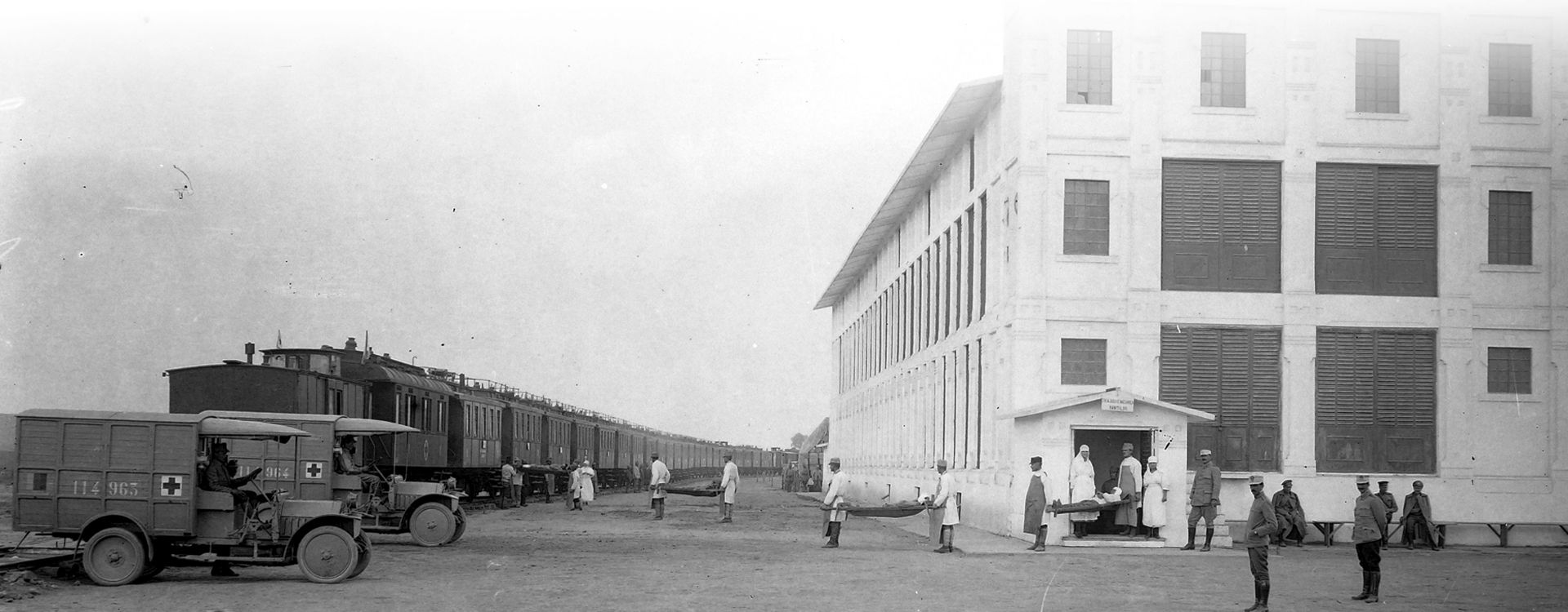
The Armistice and the Bucharest Peace Treaty
Despite the victories in the summer of 1917, Romania faced a difficult situation caused by the behaviour of the Russian troops on its territory. Many were in a state of anarchy and susceptible to communist ideas. From the point of view of the Allies, the Russians had become adversaries, threatening to endanger the internal security of Romania. The situation became even worse after the Bolsheviks seized power on November 7, 1917, and the new Russian government in Petrograd decided to prepare an armistice with the Central Powers: the Treaty of Brest-Litovsk. The signing of the treaty left Romania with few options and no support from its allies, forcing Romania to accept the terms of the Armistice of Focşani on December 9, 1917. In the following weeks and throughout January 1918, the Bolshevik Russian troops who had caused looting and destruction were disarmed and evacuated.
In spite of the armistice agreement, Romania’s state of belligerence with the Central Powers was only suspended. On February 6, 1918 they faced an ultimatum for the initiation of peace negotiations. The task of negotiating with the Central Powers fell to the new government led by General Averescu. When Russia and the Central Powers signed the Treaty of Brest-Litovsk on March 3, 1918 Romania was left isolated from its Entente Allies. A preliminary peace treaty between Romania and the Central Powers was signed in Buftea on March 5, 1918, and the new Romanian prime minister, Alexandru Marghiloman, signed a final version in Bucharest on May 7, 1918 — referred to as the Bucharest Treaty. This treaty, while recognizing Romania’s union with Bessarabia, ceded Dobrogea to Bulgaria; expanded Austria-Hungary’s territory on a strip along the Romanian mountains; reduced the Romanian army to four divisions through demobilization; and allowed for German control of Romania’s oil production, its trade in cereals as well as other exports and gave Germany control of navigation on the Danube River. The Bucharest Treaty, although signed by Romania’s prime minister and ratified by Romania’s Chamber of Deputies and Senate in the summer of 1918, was never signed or promulgated by King Ferdinand I.
The New Mobilization and Romania’s Re-Entry into the War in 1918
Although much of the army had been demobilized because of the Bucharest Treaty, the army’s General Staff, commanded by General Constantin Christescu, prepared the remaining divisions for a resumption of fighting by planning a new mobilization. The radical changes in the war after breakthroughs by the Eastern Army on the Balkan front in September 1918 created favourable conditions for Romania’s re-entry alongside the Entente. The re-engagement had also been requested by France, which sent a message to this effect to Iași on October 16, 1918. After the Eastern Army reached the Danube on November 8, 1918, the Romanian government led by General Constantin Coandă gave an ultimatum to the troops occupying Romania to leave, and the new mobilization was decreed by King Ferdinand I on November 9, 1918. Romania thus re-engaged in war with Germany and Austria-Hungary two days before the signing of the November 11 armistice at Rethondes-Compiègne.
The Final Peace Negotiations
Romania was not invited to the military convention in Belgrade on November 11, 1918, where demarcation lines were being drawn in which half of Transylvania would remain in Hungarian territory, contrary to the promises made in the August 1916 treaty between Romania and the Entente. After the evacuation of the Central Powers from the territory they had occupied, the Romanian army advanced into Transylvania and Banat, but only up to the Mureş river as specified by the Belgrade convention.
Only after December 1, 1918 did the Great National Assembly in Alba Iulia decide that Transylvania, Banat, Crișana and Maramureş would be united with Romania. On December 15, 1918 the Great Headquarters ordered the crossing of the Mureş river, an action approved by the Allied Command on January 4, 1919. On December 24, 1918 the Transylvanian Troops Command was established, which led to operations against the Hungarian Soviet Republic in 1919.
Thus ended Romania’s participation in the First World War. After their forced peace with the Central Powers in 1917, the country returned to their alliance with the Entente. The territories in Austria-Hungary, for which the Romanian army had gone to war in August 1916, were united with Romania by the assembly in Alba Iulia and by the General Congress of Bucovina on November 28, 1918. The union was based on the freely expressed democratic decision of the population in accordance with the principles of self-determination proclaimed by U.S. President Woodrow Wilson in his Fourteen Points. During 1919, the Romanian army had to carry out a series of military campaigns, both in the east and in the west, not only to safeguard the decisions of the union, but also to counter the Bolshevik danger in Central Europe.
December 1, 1918: A Symbolic Moment for the Unification of Romania
The most important historical event for Romanians is linked to the city of Alba Iulia, namely the union of all the historical Romanian provinces beyond the mountains with the Kingdom of Romania. The beautiful Transylvanian city witnessed the realization of the centuries-old wish of the Romanian nation: the union of all Romanians.
Through the plebiscite assemblies in Chișinău in April 9, 1918, in Cernăuți November 28, 1918 and then in Alba Iulia December 1, 1918, the unification of Romania was decided by newly formed political structures, through the free vote of the representatives of the majority Romanian populations and also through that of national minorities. The assembly in Alba Iulia on December 1, 1918 represents the final act of achieving national unification. Alba Iulia remains, in the historical consciousness and collective mentality of Romanians, the symbolic city of the state and national unity of Romania.
Joseph Whiteside Boyle and the Surprising Romanian-Canadian Friendship
A lesser-known Romanian story from the Great War is that of Canadian officer Joseph Whiteside Boyle (1867-1923). Courageous, and with a strong sense of duty, Colonel Boyle became a well-known name in the Romanian political and military environment.
After serving as British adviser on Russian railways, Boyle arrived in Romania in February 1918 charged with a number of special missions by the Romanian government. In April 1918 he coordinated the release of high-ranking Romanian hostages in Odessa who had been taken prisoner by the Bolshevik authorities. Through his mediation in 1919, Romania obtained a loan of $25 million from the Canadian government. For his skills in negotiating with the new Bolshevik regime established in Russia, Colonel Boyle was decorated by King Ferdinand I with the Order of the Star of Romania. Boyle remained close to the Romanian royal family and stood out for his close relationship with Queen Marie of Romania, who is said to have retained an affection for him until the end of her life. Colonel Boyle remains a symbol of Romanian-Canadian friendship.
Text courtesy of the Institutul pentru Studii Politice de Apărare și Istorie Militară / Institute for Defense Policy Studies and Military History.