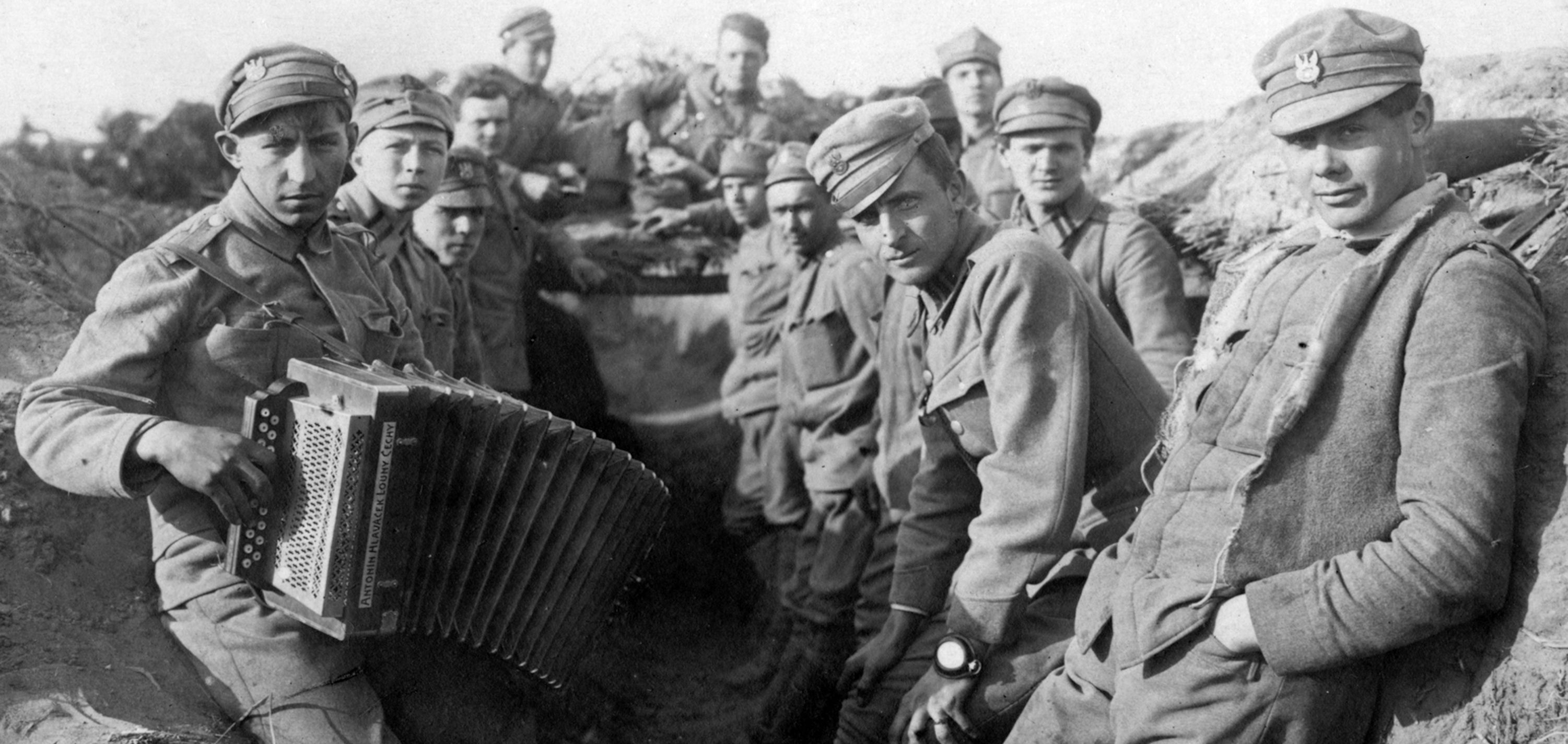
Poland and the First World War
Before the 1914–1918 war, the Polish people’s homeland had been denied by its neighbours since the end of the eighteenth century. Russia, Austria and Prussia, all much stronger than Poland, had divided the territory between them during the three Partitions of Poland.
The Movement for Independence
But the Polish nation, sustained by the thought of a free homeland, took up arms to fight for independence. The first attempt was made with Polish Legions serving in the French army of Napoleon. Then came the creation of the Army of the Duchy of Warsaw in the early nineteenth century. Without success and despite a changing international situation, Poles continued their struggle. Throughout the nineteenth century, Polish uprisings against their invaders broke out in various parts of the land. The November Uprising in 1830–1831 and the January Uprising in 1863–1864 were the largest. Unfortunately, both ended in failure, primarily due to the hugely disproportionate forces arrayed against them. The Polish insurgent units could not defeat the larger regular armies, and the Poles remained without allies in the international arena in their struggle for independence.
A renewal of Polish national aspirations appeared at the beginning of the twentieth century, along with an increase of tensions among the invaders — Austria, Russia and Germany. In the emerging political and military alliances, Russia stood on one side in the Triple Entente along with France and England. On the other side was Germany and Austro-Hungary. For the Poles it was a time of difficult questions and choices: how to act in the new political reality, and with whom to ally in carving out an independent homeland? There were two competing trends in Polish political thinking: the first was to come to an agreement with Russia, and the second an alliance with Austro-Hungary. In both cases, the hope was that an alliance in a coming war would lead to freedom and independence.
The Early Twentieth Century
The Polish people were aware that in the event of a war between the two large alliances, they would need their own military force to be able to fight for independence. At the start of the twentieth century, a number of paramilitary groups and organizations began to form to carry out military training. For political reasons, these groups were created mainly in the region of the Austrian Partition. In 1908 on the initiative of Kazimierz Sosnkowski, the Active Fighting Association (Związek Walki Czynnej, or ZWC) was founded. It was a secret military organization commanded by Józef Piłsudski. At the outbreak of the First World War it had over 7,000 members in units stationed in all three Partitions of the Polish territory, where they conducted secret military training courses. In the following years, more paramilitary organizations under the command of, or cooperating with, the Active Fighting Association were formed: the Riflemen’s Association and the Sports Association ‘Strzelec’ (Związek Strzelecki–ZSi Towarzystwo Sportowe ‘Strzelec’) with over 8,000 members, and Polish Shooting Teams (Polskie Drużyny Strzeleckie), with about 6,000 members. They wore grey uniforms and military greatcoats. By the end of the first six months of 1914, these associations had over 12,000 members.
The Outbreak of War
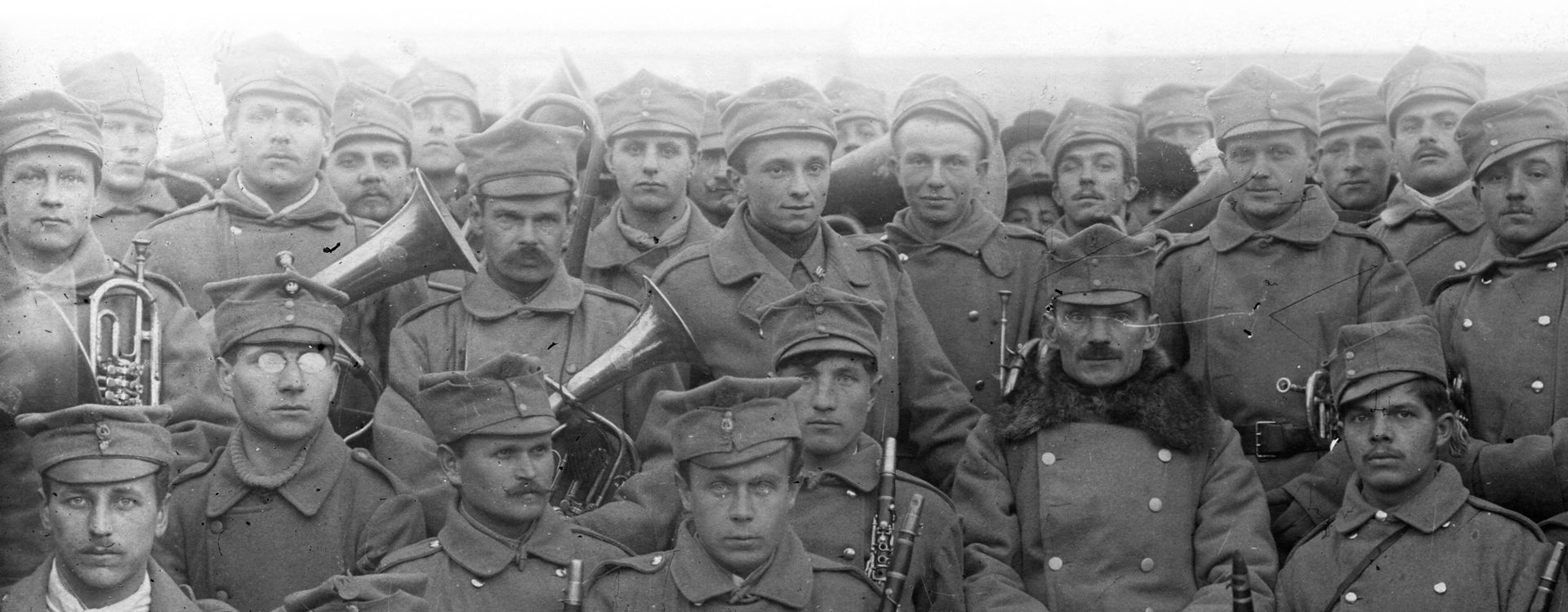
At the outbreak of war in 1914, despite obvious fears the hope arose in millions of Polish people that they would finally win their independence. Efforts were made to create Polish national contingents as part of the two fighting alliances — the Triple Entente and the Triple Alliance. In the Austro-Hungarian Army, Polish Legions went into battle against Russian troops. These Polish contingents were usually formed from members of the shooting, gymnastic and scout associations. By mid-1915, over 25,000 Polish Legion soldiers had served in the Austro-Hungarian Army, with Józef Piłsudski, the commander of the 1st Brigade, playing a prominent role.
However, in 1917 the Polish Legionaries were ordered to pledge allegiance to the German Emperor Wilhelm II and to swear to maintain their brotherhood of arms with German and Austro-Hungarian troops until the end of the war. But in accordance with Piłsudski’s recommendations, most of the 1st and 3rd Brigades of the Polish Legions refused to take the oath. This resulted in a major crisis. These Polish soldiers were interned, or their units were split up and incorporated directly into the Austro-Hungarian Army. Other legionaries formed the Polish Auxiliary Corps (Polski Korpus Posiłkowy) under German command that by January 1918 had over 7,000 men.
Józef Piłsudski believed that true Polish independence would not be gained in an alliance with Austro-Hungary, and even more so not with Germany. This was why in preparation for independence in August 1914, the Polish Military Organization (Polska Organizacja Wojskowa, or POW) was created. It was a secret group whose intelligence and subversive activity was initially directed against Russia. But in 1917, after the Oath Crisis and when there were no longer Russian troops on Polish lands, the POW took action against their other two invaders — Austro-Hungary and Germany. By October 1918 there were almost 30,000 in the ranks of Polska Organizacja Wojskowa, and by November 1918 they had started disarming German troops. The Polska Organizacja Wojskowa, together with the Legionaries, made up the beginnings of the new Polish Army in a reborn nation.
Meanwhile, on the other front, Polish Legions were formed in the armies of the Triple Entente. The Polish National Committee, headed by Roman Dmowski, played the primary role. In 1914 the First Polish Legion was formed in Russia (about 1,000 soldiers), and the following year a Second Polish Legion of about the same size was established. Eventually, due to the unfavourable attitude of the Russian authorities toward them, the Legions were dismantled and the remaining Legionaries were incorporated into the Polish Rifle Brigade (about 4,000 soldiers), which was then transformed into the Polish Rifle Division that, over time, grew to about 29,000 soldiers.
Any efforts to create larger Polish divisions were not approved by the Tsarist authorities. The situation changed only in 1917 after the February revolution, when the Tsar was dethroned and Russia’s newly formed Interim Government agreed to form the First Polish Corps. Their commander was General Józef Dowbor-Muśnicki. The First Polish Corps totalled 29,000 soldiers and they fought hard against the Bolsheviks.
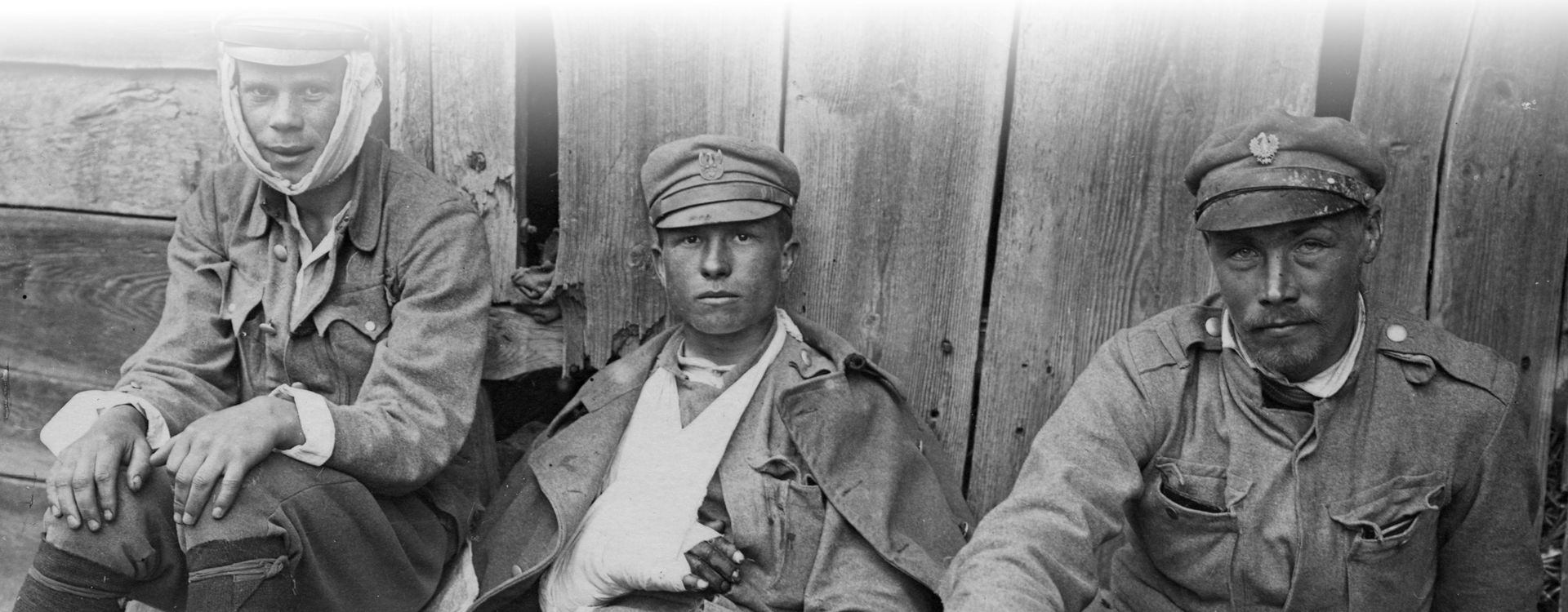
As the First World War continued, German troops entering Russian areas decided to disarm the First Polish Corps soldiers and send most of them to Warsaw. Consequently by the autumn of 1918, these returning Polish soldiers joined in organizing the new Polish Army. A similar fate befell the soldiers of the Second Polish Corps when the Germans demanded that they lay down their arms. The Polish Corps refused, and a day-long battle ensued. Eventually the German forces overpowered the Poles, who had run out of ammunition. The 3rd Polish Corps in Russia formed in December 1917, made up of about 3,000 men. They had to surrender in mid-1918 when they were encircled by Austrian divisions.
Polish contingents were created not only in the armies of Russia and Austro-Hungary but also in France. In August 1914 Polish volunteers wanted to establish a Polish military legion in the French Army. But as a result of Russian pressure, the French government did not agree. Polish volunteers were then directed to the French Foreign Legion, in which two Polish companies of about 500 soldiers were formed. However, after these Polish units were bled out in the fighting in 1914–1915, they were disbanded. After that, all initiatives to establish new Polish military units in France failed to receive the approval of the French government, which treated the ‘Polish issue’ as an internal matter of its ally Russia.
Only in 1917, after the Russian Revolution changed the situation, was French permission obtained to form a Polish contingent in France. It was called Haller’s Army after its commander, General Józef Haller, or the Blue Army after the colour of the French-issued blue uniforms. Haller’s Army was officially included with the Allied forces. At almost 70,000 soldiers, it included Polish volunteers serving in the French Army, Polish-Russian troops in France, Polish prisoners of war from the German and Austro-Hungarian armies, as well as emigrants from France, the United States, Canada and Brazil.
Polish Volunteers in Canada
Almost a third of Haller’s Army (over 20,000 soldiers) were volunteers who had arrived from North America. Their training camp — The Tadeusz Kosciuszko Polish Army Training Camp — was in the Canadian town of Niagara-on-the-Lake, where today there is a cemetery with the graves of twenty-five Polish volunteers.
The Polish Army in France included not only troops created on the Seine, but also two Polish divisions formed in revolutionary Russia. They were the 4th Division of Polish Riflemen from southern Russia, numbering about 3,000 soldiers, and the 5th Polish Rifle Division from eastern Russia and Siberia, of around 16,000 soldiers. Both fought against the Bolsheviks and tried to return to Poland.
Polish Independence
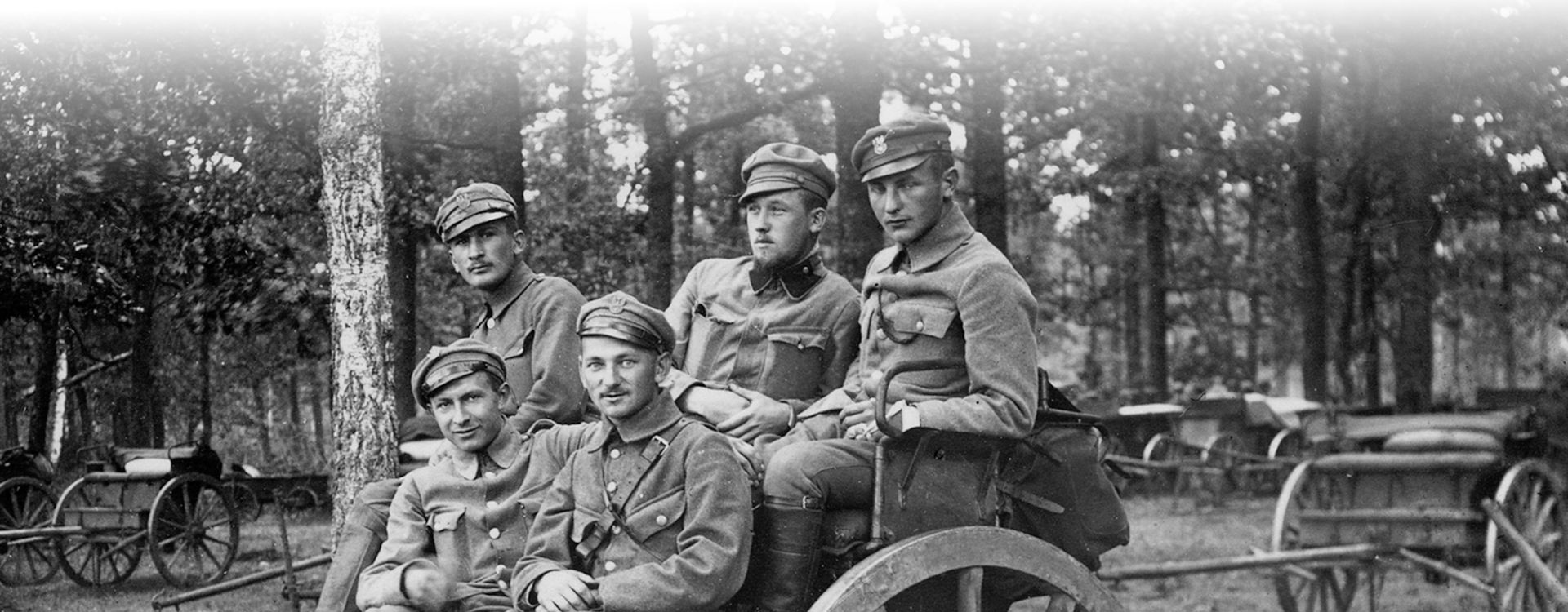
In November 1918, after 123 years of being under the rule of other nations, Poland finally regained independence, through the blood and sacrifice of Poles fighting on all fronts of the Great War.
For Polish society, the First World War was a particularly dramatic time. It brought not only death and destruction, but it also forced many Poles into fratricidal fights. Officially, Poles were German, Austro-Hungarian or Russian citizens, hence their compulsory recruitment into the armies of these countries. It meant that Poles, dressed in the uniforms of foreign nations, often were on opposite sides of the front lines fighting fellow Poles. On both the Western and Eastern fronts, military units composed mostly of Poles could hear conversations in Polish from the trenches opposite.
A total of 3.4 million Poles were incorporated into the armies of the three partitioning powers of Germany, Austro-Hungary and Russia, of which:
- around 1.4 million were in the Austro-Hungarian Army
- about 780,000 were in the German Army
- about 1.2 million were in the Russian Army.
Almost half a million Poles lost their lives during the war, and around 900,000 were wounded.
For the newly reborn Polish state, November 11, 1918 did not mark the end of military operations but led to their intensification. Fighting to establish the locations of the Polish borders began, and a new threat appeared from the east — the Red Army. The goal of the communists was to destroy the reborn Polish state and to introduce revolution with rifles and bayonets. Exhausted by the four-year war, Polish society had to take up arms once again. In 1920 a battle took place that Lord Edgar Vincent D’Abernon called the “eighteenth decisive battle of the world.” In the Battle of Warsaw in August 1920, the advancing Red Army was stopped and turned back by the Polish Army. Thus, not only Poland but also possibly western Europe was saved from Russia’s communist revolution. But this victory was paid for with a huge tribute of blood. Between February 1918 and October 1920, around 60,000 Polish soldiers were killed in what was called the Polish-Soviet War.
The Military Historical Bureau of Poland