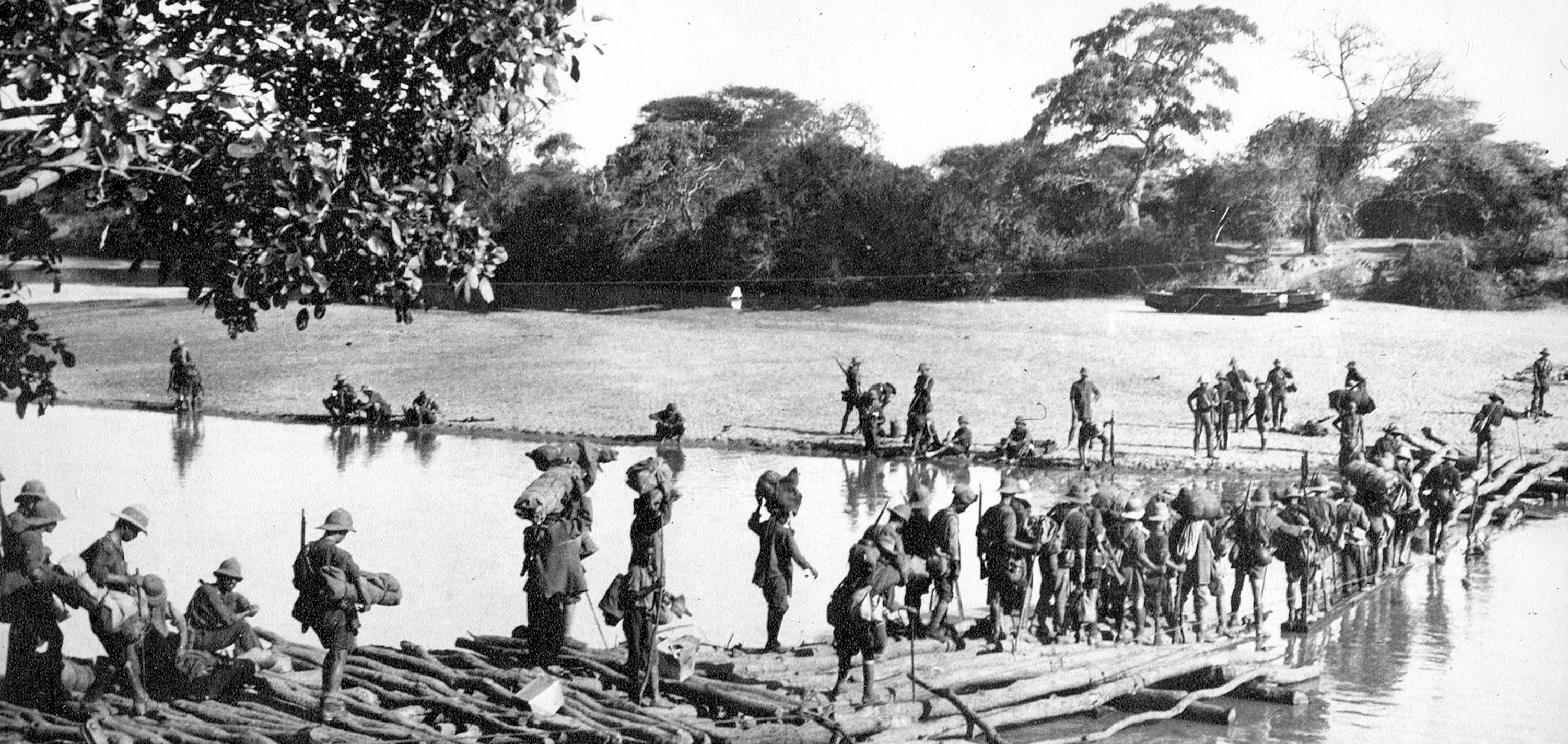
South Africa and the First World War
South Africa’s Union Defence Force (UDF) was created only two years before the outbreak of the First World War, and it was created to be capable of defending South African territory.
In August 1914 about 6,000 British soldiers garrisoned in South Africa were released for duty in France, leaving South Africa’s defence entirely in the hands of the UDF. At around the same time, some South Africans who wanted to serve in the war joined British elements in Europe and elsewhere in Africa. The Union of South Africa declared war on September 12, 1914 and was preparing for an invasion of German South West Africa (now Namibia) with support from British warships.
South Africa’s first ever large scale seaborne military attack landed soldiers in German South West Africa on September 18, and took Lüderitz Bay unopposed the following day. After several battles, and one South African defeat at Sandfontein, the German colony surrendered on July 9, 1915. This marked the first Allied victory in the First World War. The UDF had sent around 50,000 combatants against the Germans’ 9,000, and victory was achieved with minimal casualties.
On October 7, 1914 a few rebelling South Africans signed a treaty with Germany with an eye to creating a new South Africa independent of Britain. Martial law was declared on October 14 and 32,000 troops were mobilised to suppress the rebellion of about 12,000 South Africans. After a few skirmishes and minor assistance from German colonial forces, on January 30, 1915 a surrender was received by the UDF that all but ended the rebellion.
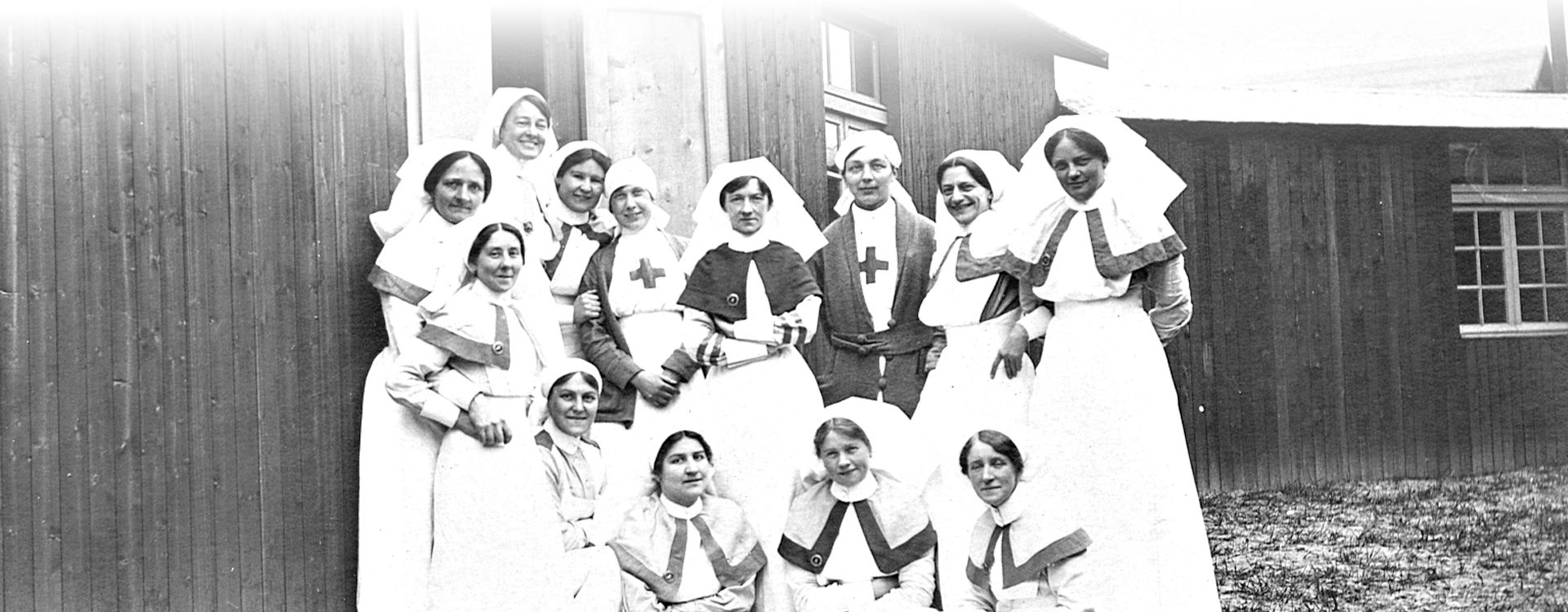
Early in 1916 South African forces joined the British and became the bulk of the Allied force in East Africa. Jan Smuts arrived in Mombasa on February 19 to take command. Smuts pushed the German forces led by General Paul Emil von Lettow-Vorbeck out of British East Africa and eventually out of German East Africa as well, but did not manage to secure the German surrender until November 25, 1918. This made von Lettow-Vorbeck’s surrender, received by South Africa, the final surrender of a German General in the First World War.
When more Allied forces were needed in Egypt, South Africans on their way to the fight in Europe were redirected to Egypt, at the very end of 1915, for their experience of desert warfare in German South West Africa. On January 23, 1916 South African forces joined British and other Commonwealth forces in combat against the Senussi. After an initial victory, the South Africans joined a long march leading to combat in late February. A further victory was achieved in March, removing the Senussi threat and opening the harbour at Sollum. On April 10, 1916 the South African Brigade left Egypt for France.
After a period of training in trench warfare in France, the First South African Infantry Brigade joined combat on the Western Front, entering into the most intense combat South Africa experienced in the First World War. In the Somme region on July 6, 1916 South African forces moved into Bernafay Wood, relieving the British forces who had captured it. On July 8 the South African Brigade helped clear Trônes Wood, suffering over 200 casualties.
As the second phase of the Battle of the Somme began, South African forces were facing what would become their most remembered battle of the First World War. Britain’s 9th Division aimed at capturing the town of Longueval, which lay alongside the small forest called Delville Wood. The town lay right up against Delville Wood such that it could not be held without the forest also being in Allied hands. The South African Brigade was ordered to take and hold Delville Wood on July 14, 1916 at all costs. At the time, after about 1,000 casualties were taken in France over the previous days, the Brigade had little over 3,000 men, having received around 500 reinforcements. On July 20 the South African Brigade was relieved by the 76th Brigade of the 3rd Division. The following roll call found the South African force reduced to less than 800 men. In that week of fighting, the South African Brigade had successfully held Delville Wood against intense shelling and repeated German charges. At times, the rate of shelling on the small forest exceeded six shells per second sustained for hours.
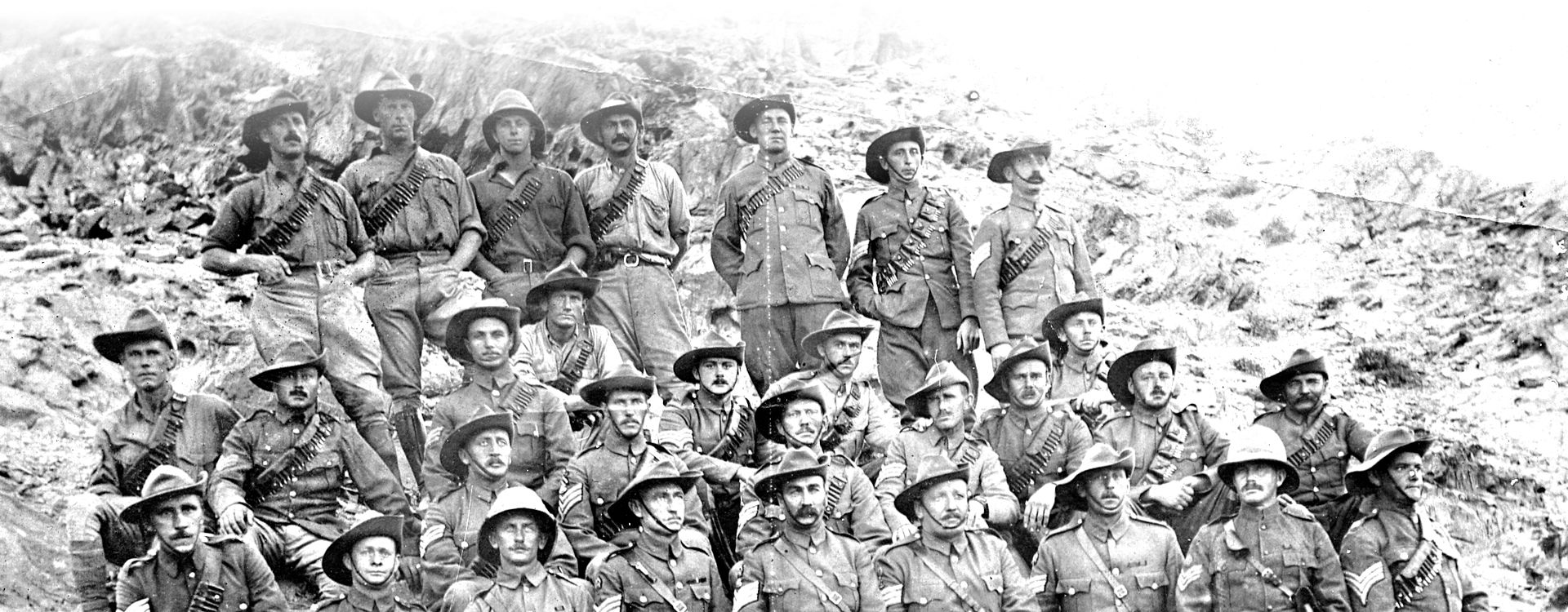
In October 1916 South African forces took part in an attack on a hill called the Butte of Warlencourt, suffering 1,150 casualties in ten days. Over the following period of ‘static warfare,’ the South African Brigade took over 200 casualties near Arras.
On February 20, 1917 the SS Mendi left Plymouth for Le Havre, transporting the men of the South African Native Labour Contingent (SANLC). In heavy fog, the SS Darrow collided with the SS Mendi early on February 21. More than 600 South African soldiers were killed.
In Haig’s spring offensive, the remains of the First South African Brigade advanced with the 9th Division of XVII Corps in early April 1917. By the time the 4th Division entered Fampoux on April 12, the South African Brigade had taken another 694 casualties. South African forces took part with the 9th Division in the attacks on Messines Ridge and Ypres before being rested on September 22, 1917. On October 13 the South African Brigade was moved up to Passchendaele before being rested again, and on December 1 they returned to the front lines at Gauzeaucourt.
In July 1918 South Africa’s 1st Battalion of the Cape Corps was assigned to the British 160th Infantry Brigade. The Cape Corps entered combat on August 19 against the Turkish Army near Ramallah. During a September 1918 offensive, the Cape Corps successfully occupied Square Hill on September 19.
When the German spring offensive began on March 21, 1918, the remaining South Africans occupied nearly 2 kilometres of the front line left (north) of the 21st Division. In the first two days of the German offensive, the South African forces lost 900 men in fighting withdrawals. On March 24 the Brigade had around 500 men left and was ordered to hold a ridge near Marrieres Wood at all cost. Shelling throughout the day reduced the Brigade to its last 100 men, who were mostly injured. With little ammunition remaining, the First South African Brigade surrendered.
David Rilley-Harris
Ditsong National Museum of Military History
Bibliography
Couzens, T.: The Great Silence: From Mushroom Valley to Delville Wood, South African Forces in World War One, Art Publishers, Midrand, 2014.
Nasson, B.: WW1: And the People of South Africa, Tafelberg Publishers, Cape Town, 2014.
Union of South Africa and the Great War, 1914-18: Official History, General Staff Defence Headquarters, Pretoria, 1924.