Germany and the First World War
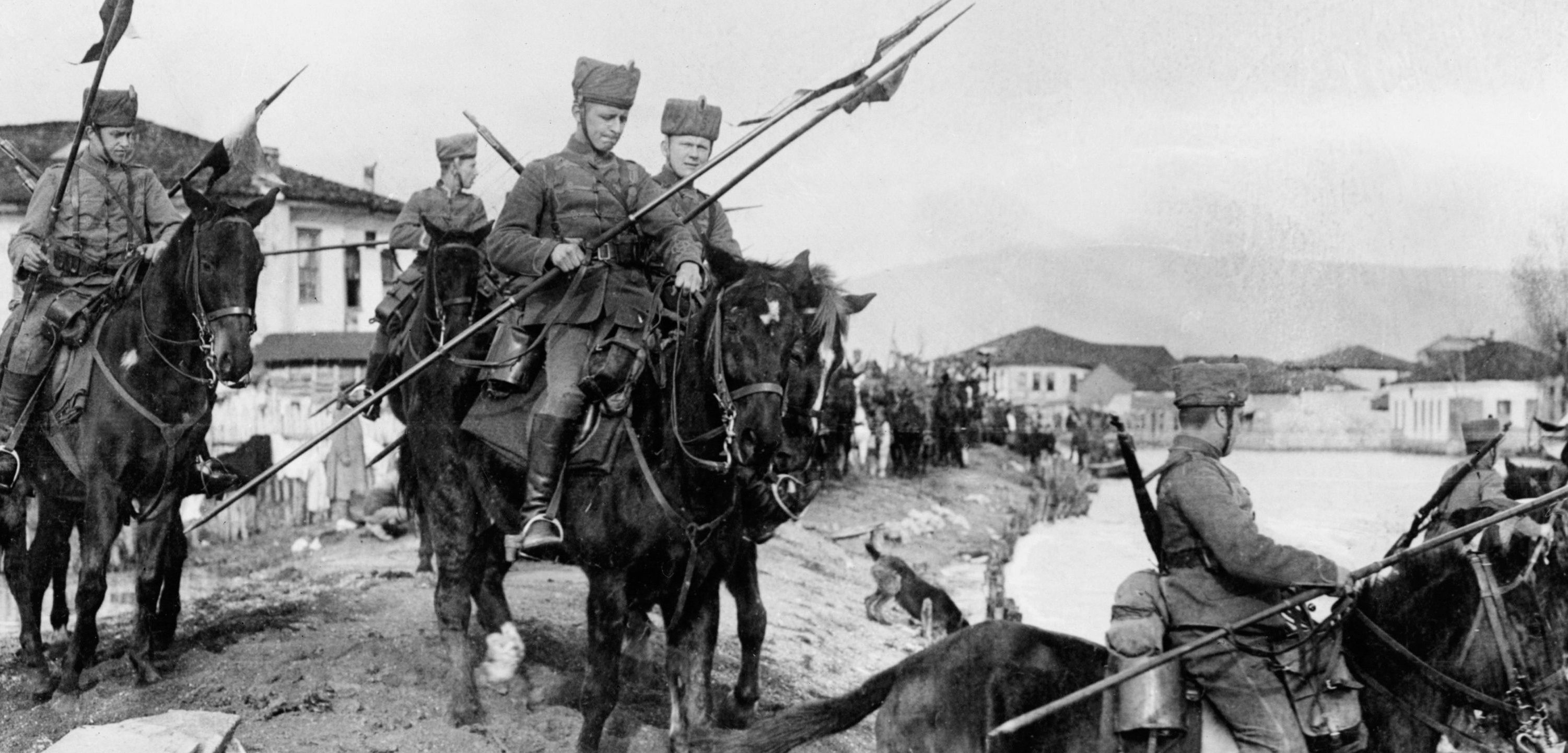
On August 3, 1914 the first units of a 1.5-million-strong invasion force crossed Germany’s western borders into Belgium. The Schlieffen Plan had been formulated to enable Germany to achieve a quick victory on the Western Front, before Russia could mobilise fully, but stout resistance by French, British and Belgian armies knocked the plan off balance. With astonishing rapidity, the German dream of a series of quick, decisive victories followed by the establishment of a new European order was dashed. Instead, by the end of 1914 Germany found itself committed to exactly what it had hoped to avoid: a long war being waged on multiple fronts simultaneously.
In the east, German armies saw some of their most stunning victories against the forces of Russian Czar Nicholas II and his allies — from the massive victory at Tannenberg in August 1914 to the brilliant countermoves of the Brusilov Offensive in 1916 that would eventually force Russia to sue for peace. In German East Africa and Tsingtao (China), there were battles to defend colonial possessions and extend influence. On the high seas, the German capital ships fought a number of major engagements, especially at the Falkland Islands in December 1914 and Jutland in June 1916, although it is difficult to argue that those battles had much to do with the outcome of the war. Much more significant were the operations of German U-boats, which attempted to blockade the British Isles and cut off vital imports. And above the battlefields, airmen of the German naval and army air services engaged in tactical operations, reconnaissance, artillery spotting and aerial bombing from the first month of the war to the last.
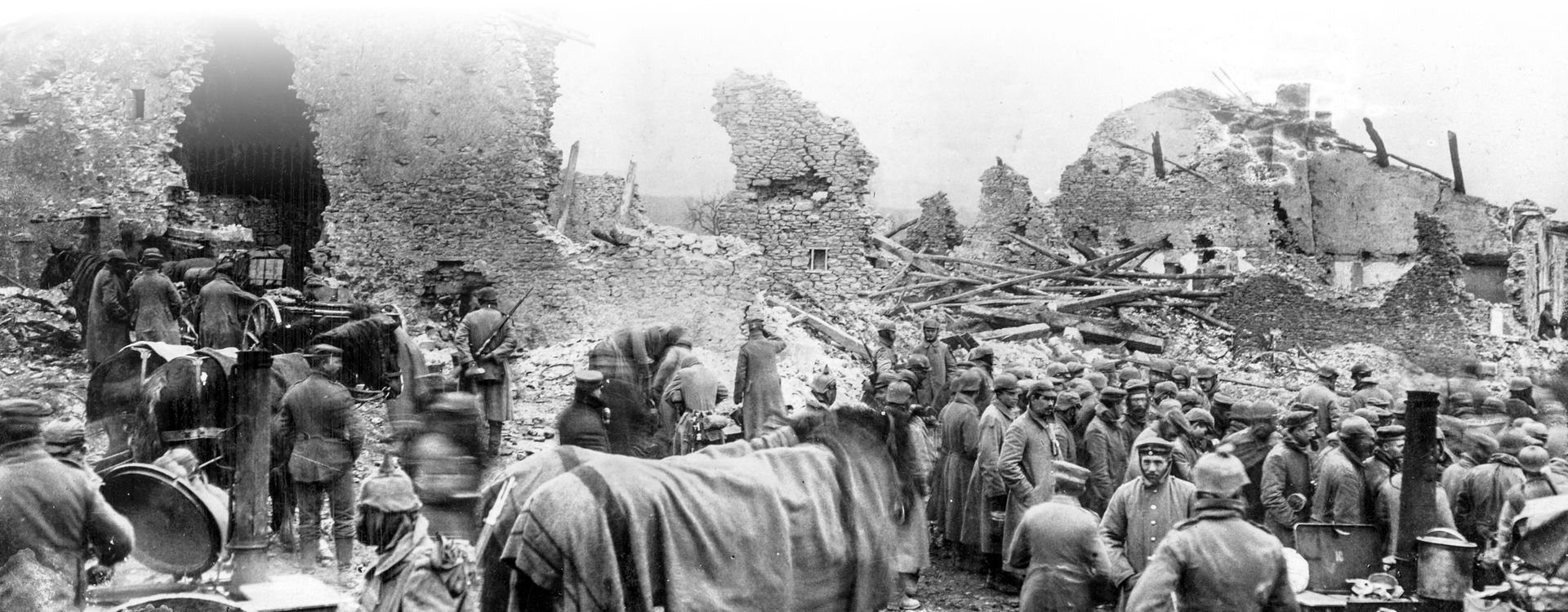
But it was on the Western Front, according to many observers, that a decision had to be reached. For four years, along the trenches that stretched from the Swiss border in the south to the English Channel in the north, German armies engaged in a bitter slogging match against armies of the Entente — at Ypres, Artois and Champagne in 1915; Verdun and the Somme in 1916; and the Hindenburg Line, Champagne and Passchendaele in 1917. In March 1918 Germany launched a massive offensive that blasted a hole in British lines and brought the Allies closer to defeat than at any time since the war had begun. But it was Germany’s last throw; once it ran out of steam, British, French and American armies began pushing back. In November 1918, its army fatally weakened though not broken and its civilian population enduring a crushing blockade, Germany asked for an armistice.
The First World War’s legacy for Germany was enormous: economic ruin, social upheaval, political extremism and constitutional crisis, not to mention as many as two million military dead. At roughly thirty per thousand of population, this was one of the highest death rates among the combatant nations.