Italy and the First World War
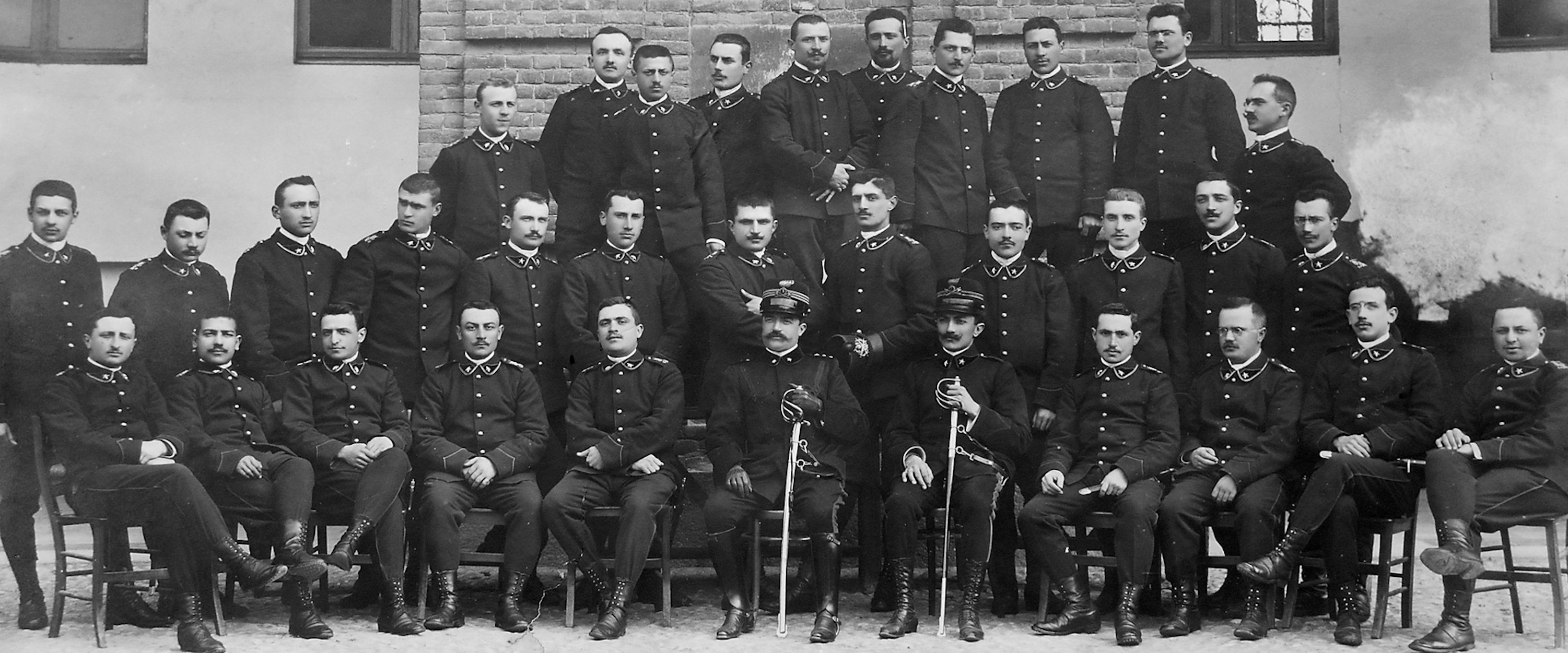
At the beginning of the First World War, the Italian government, with the consent of the monarchy, chose to stay neutral and began to negotiate with both sides involved in war. Italy had signed the Triple Alliance with Germany and Austria-Hungary in 1882, but now, hoping for major territorial gains, the Italian government decided to switch sides and fight alongside the Triple Entente (France, Britain and Russia). On May 25, 1915 Italy entered the war on the basis of the Treaty of London, which had been signed the previous month but remained secret until 1917.
From the summer of 1914 until joining the war in 1915, the country was split as different opinions for or against joining the conflict developed: this division emerged in public and private meetings but soon degenerated into street clashes, fomented by politicians, intellectuals and trade unionists thanks to the use of old and new media.
Interventionist Currents
Although initially a minority, the Italian interventionist movement was successful in influencing the public sphere by using common slogans. Intellectuals such as Filippo Tommaso Marinetti, the founder of the Futurist movement, supported Italy’s entry into the war with speeches and journal articles. The poet Gabriele D’Annunzio also helped to reinforce nationalist myths and promote patriotism. One of the most famous supporters of this opinion was Benito Mussolini, the future Duce of Fascism, expelled from the Socialist party and from the socialist journal he directed, Avanti, because of his interventionist position. Many new nationalists were also in favour of intervention, in order to secure Italian expansion into the Adriatic Sea and the Balkans.
Alongside these groups emerged a party of democrats and the revolutionary left. Anarcho-syndicalists and Republicans, as well as trade unionists, thought that the war against the Central European Empires could be a fight against different forms of oppression. Two examples of their desired results were the end of the monarchy and a complete transformation of Italian society, linked to the transfer of power into the hands of the working class.
Italian Irredentism
Italian Irredentism was a movement fuelled by a Hegelian interpretation of the national spirit. This theory considered Tyrol, Istria, Trieste, Gorizia and the neighbouring areas as a ‘natural’ part of the Italian nation because of common cultural, linguistic and historical elements. The Irredentist theory defined the First World War as the last of the wars of Italian unification (1870), responding to the need to “make Italy whole.” For this reason, supporters of Irredentism pushed the country into the Great War.
Before 1915, Irredentist groups worked for Italian intervention on the side of the Allies in order to receive the “unredeemed territories” controlled by the Habsburg Empire. During the war, Irredentism was able to underline, using propaganda, the inability of the Austro-Hungarian Supreme Command to distinguish between moderate nationalists and Irredentists. This became glaringly obvious when the Austrian Army captured the former Reichsrat deputy Cesare Battisti in Italian uniform and executed him. This event changed the approach of many pro-Habsburg politicians from Italian-speaking areas, strengthening a widespread nationalistic feeling against Austria.
Pacifists, Non-Interventionists and Neutralists
Pacifist positions had been tested for the first time during the colonial war of 1911–1912 to conquer Libya, when nationalism and pacifism became incompatible. The motto “war on war” proposed by socialists was based on the Marxist belief that all wars between states were conflicts between middle classes, and therefore the proletariat should not take any part in these capitalist tensions.
Especially for the Italian Socialist Party (PSI), the war was portrayed as a dispute between imperial empires, and so Italian socialists remained committed to non-intervention even while other socialist parties in Europe converted to their national cause and dropped class interests in favour of patriotism. Many Liberals close to Giovanni Giolitti, the five-time prime minister of Italy, shared the position of the PSI. They thought that the country was ill-prepared in military and economic terms for this conflict and the war would be a disaster for the national economy. Industrialists and financiers also opposed any intervention, preferring to make profits and take advantage of the war by selling their products to both sides.
Furthermore, in Liberal opinion, an intervention would increase social tensions and might end in a revolution, as in Russia. The same fear was felt by the Catholic Church, even if the Vatican hierarchies did not hide their sympathy for the Catholic Habsburg monarchy. The Vatican had to oppose any Italian intervention in order to maintain its control of the peasantry, its main social basis and the class that would be most involved in the war.
Pacifists were the majority in the country, but they had so many different ideas about the future of Italy that it was impossible to create a coalition against the interventionists.
The Italian Front: 1915–1916
When Italy entered the war, its land forces were composed of four armies under the supreme command of General Luigi Cadorna.
Over two years and eleven attacks on the Isonzo (the river that flows through Slovenia and Italy), Italian troops had only advanced 10 miles inside Austrian territory. There were heavy losses on both sides. This stalemate affected the morale of the troops, especially when the fighting became trench warfare and soldiers were obliged to live in deep ditches for protection. The morale of the Italian troops was also affected by the frequency of the offensives ordered by General Cadorna.
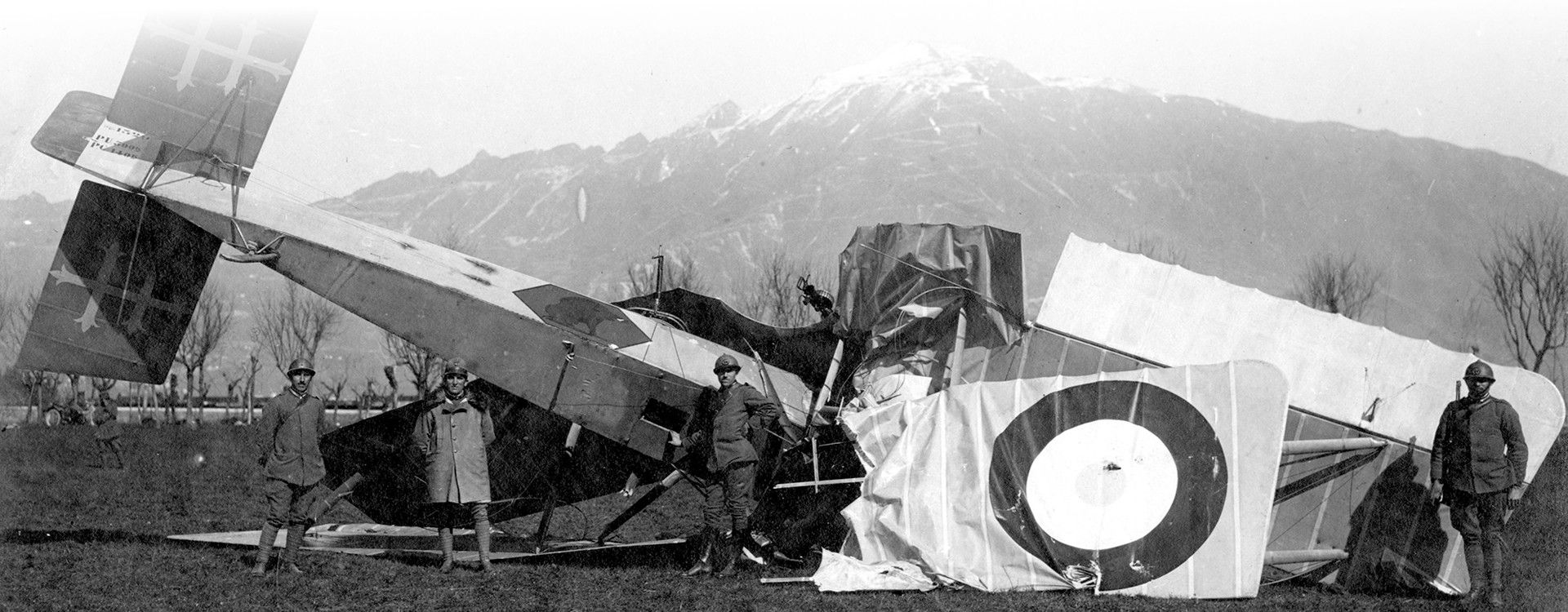
In 1916 the Austro-Hungarian Army counterattacked in the Battle of Asiago in Trentino and failed to break the Italian lines. Italian troops withstood the enemy assaults with little loss of ground until September 1917, when a revolution obliged Russia to leave the war, allowing the Central Powers to deploy extra soldiers to the Italian Front.
The Battle of Caporetto: An Italian Military Disaster
On October 24, 1917 the Battle of Caporetto (the twelfth battle of the Isonzo) began after hours of shelling with poison gas. The Central Powers secretly concentrated a powerful force, employing long night marches that transported supplies and ammunition on pack animals, and then attacked in the mountainous terrain. Elite German stormtrooper units led the initial assaults, followed by Austro-Hungarian troops reinforced by German units who made good use of new light machine guns, trench mortars, hand grenades and flamethrowers. The Italian troops found it impossible to stop these forces, and after more than ten days their resistance collapsed.
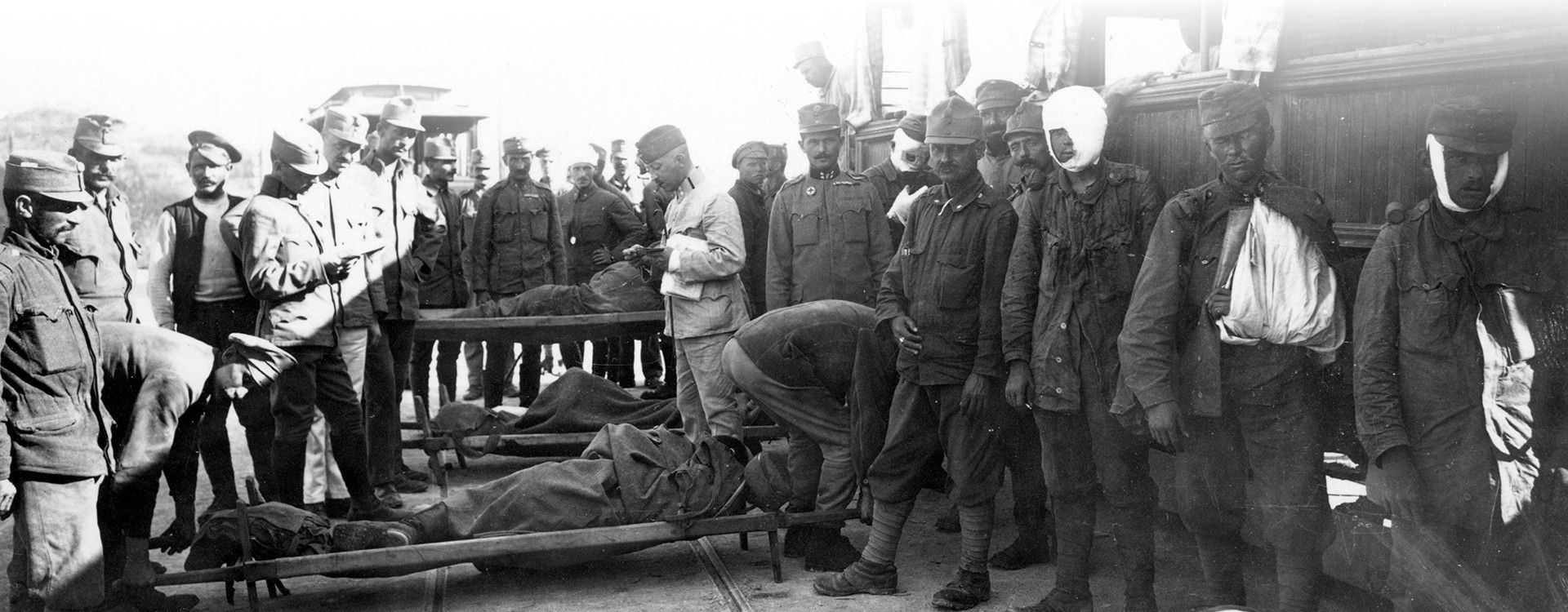
Their defeat at Caporetto caused a disintegration of the whole Italian Front. As a result of the retreat, Austro-Hungarians advanced 93 miles into Italian territory. The price of this battle was enormous: 83,000 dead and many thousands wounded. More than 260,000 Italians were taken prisoner.
The Final Years: 1917–1918
After the defeat of Caporetto, a new front line was created between the Tagliamento and Piave rivers. In November 1917, Cadorna was replaced by General Armando Diaz. Cordova had tried to attribute the defeat to the cowardice of his Italian troops, never admitting his military responsibilities for the disaster.
The year ended with a failed offensive by the Central Powers’ armies on the Piave. The Triple Alliance stopped its attacks when German troops were re-established on the Western Front and the Austro-Hungarian Army became exhausted. Italian troops repelled another assault, the last one on the Italian Front, after the Austro-Hungarian Empire was torn apart by internal ethnic rebellions.
The Italian supreme command then decided to counterattack. Their final assault started at the end of October 1918, from Vittorio Veneto. After four days, during which Austro-Hungarians fought tenaciously, Austria asked for an armistice. This was signed on November 3, near Padua. The war had ended.
The Home Front and the Role of Women
Women supported the war effort in many ways. There were female workers in the armaments factories and other war industries. Women were also called on to work in offices, hospitals and asylums. They were employed as street sweepers, conductors on streetcars, railroad ticket agents and telegraph operators.
Meanwhile, middle- and upper-class women organised volunteer work: they delivered soldiers’ clothes and were involved in the distribution of correspondence between soldiers and their families through the Office of Military News. Others managed canteens and rest houses for soldiers.
Six hundred women of the Red Cross served in the war zone as professional nurses. Other ‘women’s work’ included clearing the roads of snow for the army and carrying food for the soldiers into the trenches. The majority of these new opportunities, which can be seen as a form of emancipation, were short-lived and at the end of the war women returned to the domestic sphere and more traditional roles.
Victory?
During the war, Italy mobilised more than 2.5 million of its nearly nine million men between the ages of eighteen and sixty-five; 600,000 died and 950,000 were wounded: this was the high cost of the Italian victory.
According to the terms of the Treaty of London, at the Paris Peace Conference in 1919 Italy gained Trieste, a part of Istria, Gorizia and South Tyrol, ending Austria’s centuries-long dominion of this area. The Allies had promised Italy other territories such as Dalmatia, a part of Albania, and colonial lands in Africa and Asia. Italy also asked for the city of Fiume (now Rijeka in Croatia) with its large Italian community. But the Americans, adhering to the “principle of nationality,” refused to meet all the Italian requests and triggered the protest led by D’Annunzio and his ultra-nationalist followers, who then occupied Fiume between September 1919 and December 1920.
The idea of a “mutilated victory” (vittoria mutilata) after the First World War became one of the main fascist slogans used to build consensus between veterans and Italian public opinion, attacking the weakness of liberal governments.
After the war, Italian society was still divided between pro-war groups who did not accept the result of the Paris Peace Conference, a large party of workers and peasants supported by socialists (inspired by the Russian and German revolutions) and veterans expecting the land that had been promised by the government at the beginning of the war as a reward for their service. Moreover, the country faced serious economic problems. The lira lost a large part of its value and inflation intensified due to new money being printed to pay for the war effort. Some arms factories and shipbuilding firms went bankrupt. Returning soldiers often found few jobs and joined the other discontented groups in society. Peasants, organised by trade unions and Catholic leagues, seized lands. Agricultural labourers and industrial and public service workers went on strike and paralysed the country.
A new movement including patriots, ex-servicemen, former assault troops, students, former pro-war agitators and ex-syndicalists emerged and found support from industrialists and landowners who were afraid of a revolution: the movement’s name was Fascism.
Simona Salustri, University of Bologna