Malta and the First World War
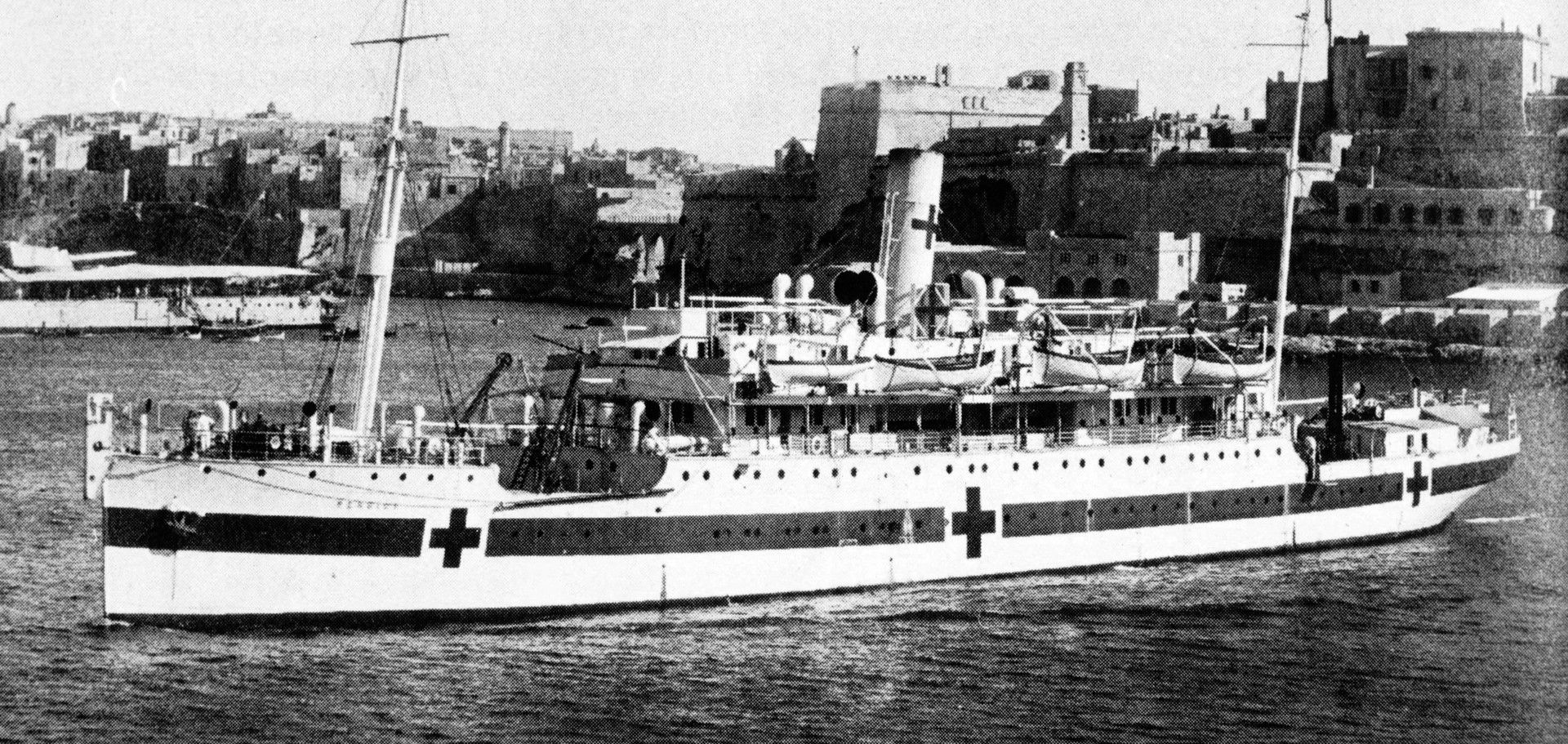
The story of Malta’s participation in the First World War tends to be overshadowed by the much larger role played by the nation in the Second World War. However, although Malta did not contribute a national fighting force in the First World War, considering the island’s importance as a Mediterranean base for hospitals it still played an effective role. Many Maltese did in fact leave the island to serve as part of British colonial forces or as members of the Maltese Labour Corps.
Before the War
In 1914, Malta was a colony of the British Crown. Before the war with no industrial base and limited commercial activity, Malta’s unemployment was a constant concern for the island’s administration. In the pre-war years a significant number of Maltese left for permanent settlement abroad. By 1914 the Maltese population was 219,300 souls.
HM Dockyard at Grand Harbour
At the outbreak of the First World War, Sir Winston Churchill invited the French Navy to use Malta as a French port. It was decided that France, under their commander-in-chief, would have authority over both the Maltese and French fleets. French naval units started arriving in Malta on August 12, 1914. Both fleets sailed to the Dardanelles to prevent the German warships SMS Goeben and SMS Breslau from breaking into the Mediterranean.
During the war a number of France’s warships entered Malta’s dockyard for repairs. In 1915, when French vessels were undergoing repairs, problems arose because the Maltese dockyard used lathes and other machinery calibrated in British imperial measurements, while the French equipment was in metric measurements. The ingenuity of the Maltese workers in HM Dockyard was epitomized by Salvu Mallia, an engine-fitter from Vittoriosa, who developed a formula for adapting the lathes and other machinery to French measurements.
Enemy submarine activity using both torpedoes and mines in the seas around Malta led to the loss of several warships and merchant vessels. Shortly before dawn on April 27, 1916, as the battleship HMS Russell approached Grand Harbour at 5:52 a.m., it hit a mine. Within twenty-five minutes the ship rolled onto its starboard side and sunk. While 625 British sailors were rescued, 124 died. Among the dead was A. Costa, a Maltese steward serving onboard. The next day the minefield laid by the German submarine U-73 claimed HMS Nasturtium when, at 9:58 p.m., the vessel drifted onto the mine line, leading to an explosion that resulted in the ship’s sinking and the loss of seven lives.
Although employment in the dockyard and the military workshops was not lacking, in total, about 1,200 Maltese volunteered to join the Labour Corps. The men were paid 2 shillings and 6 pence a day as stevedores and 4 shillings a day as gangers. By February 1917, considering the small island’s size, the number of Maltese serving in the military was significant. Five officers and forty-two men from the Royal Malta Artillery, along with several militia officers, had been with the 1,108 Maltese troops in Gallipoli and the 1,300 Maltese troops in Salonika.
Maltese naval personnel served on Royal Navy warships, including HMS Aboukir, HMS Arethusa, HMS Defence, HMS Hermione, HMS Indefatigable, HMS Inflexible, HMS Liverpool and HMS Vanguard. Maltese also served in British Army regiments such as the Cheshire Regiment, the Essex Regiment, the 10th Highland Light Infantry, the Loyal North Lancashire, the South Staffordshire Regiment, the 6th Yorkshire Regiment and others. These soldiers saw service in France, Salonika, Gallipoli and other theatres of war. Maltese were also military chaplains in the Royal Aircraft Service and in the Royal Flying Corps. Volunteers also served in regiments from the British Dominions, such as the Canadian contingent in France, including the 8th Canadian Regiment, the Canadian Grenadier Guards and the Winnipeg Rifles, as well as in the armies of France, Italy, Russia and the United States.
Hospitals in Malta
At the outbreak of the war Malta had only four hospitals: Cottonera with 167 beds; Mtarfa with fifty; Forrest (St. Julian’s) with twenty and Valletta with twenty-six – a total of 268 beds. Foreseeing heavy casualties during the Gallipoli campaign, the governor of Malta, Lord Methuen, ordered the selection of buildings suitable for medical care, thus expanding the number of Malta’s hospitals. A plan was drawn up for 2,000 beds, with an additional 500 for convalescent patients at Fort Chambray in Gozo. By June 1915, Malta had fourteen hospitals, staffed with 117 medical officers, 300 nurses and 750 medical support personnel. By July, the number of beds had risen to 13,093.
By January 1916, when the Gallipoli peninsula was evacuated, 20,000 beds were available in twenty-eight hospitals and convalescent centres throughout the island, including the governor’s palaces at Verdala and San Anton. To deal with the influx of wounded, by January 1916 there were 334 medical officers, 913 nurses and 2,032 rank-and-file members of the Royal Army Medical Corps (RAMC). The sick and wounded were arriving in Malta at the rate of 2,000 a week. Between December 2 and 9, 1915, 6,341 cases arrived. Between May 1915 and February 1919, the number of sick and wounded from Gallipoli who had been treated in Malta totalled 57,991. Another 78,130 would later arrive from Salonika.
Prisoners of War (POWs)
Malta was also a base for military prisoners but the earliest consistent nucleus of prisoners was not from the enemy’s armed forces, but rather from enemy civilian internees. The first German military personnel to be held in Maltese prison compounds were the crew of the German cruiser Emden. By mid-1916, the number of POWs had risen to 1,670. Each detainee received an identity number. The highest identity number appears on a letter written by Dr. L. Bruhl to his mother in Berlin on August 19, 1918. Bruhl’s prisoner number was 2,340.
With hindsight, perhaps the most notable German POW in Malta was Karl Doenitz — who in WWII would become commander-in-chief of the German Navy. In 1910, Doenitz had enlisted in the Kaiserliche Marine (Imperial German Navy). After the outbreak of World War I, he was serving on the light cruiser SMS Breslau in the Mediterranean Sea. By September 5, 1918, he had become commander of U-boat UB-68. On October 4, 1918, his submarine was sunk by gunfire from British forces off Gozo, leaving one submariner dead. The thirty survivors, including Dönitz, were captured and interned in Malta.
Doenitz was always reticent writing about his Maltese POW experience. However, the same cannot be said of another illustrious German prisoner at the Verdala Barracks Camp in Malta. Franz Joseph Prince of Hohenzollern left a long, detailed and at times bitter memoir of his extended prison stay. The Prince of Hohenzollern had served as naval officer on board SMS Emden, under the command of Captain Karl von Müller, when it was sunk in November 1914.
In 1918, officers and men of the SMS Breslau arrived as prisoners, together with combatants from East Africa. They were hosted in a special camp near Polverista Barracks. SMS Breslau’s 133 survivors, some in grave condition, ended up in the Verdala Barracks and St. Clement’s Camps.
Following the Armistice of November 11, 1918, the authorities did not release the POWs, citing the uncertainty of the lengthy peace negotiations in Paris. In November 1919, one full year after the armistice, some POWs finally received permission to sail for Germany, but at their own expense even though the authorities had promised a ship for the others.
Malta: Air Patrols of the Mediterranean
Limiting the movements of the enemy U-boats in the seas around Malta was a priority identified by the British in an effort to protect allied vessels in the Mediterranean. The British Admiralty believed that seaplanes, or flying -boats, would prove more effective in patrolling the region. To restrict U-boat activity, the Admiralty decided to establish a base for seaplanes in Malta. By May 1916, hangars and slipways had been constructed; by July 1916, the base was operational and the first American Curtiss H-4 small flying boats arrived.
In March 1917, to make up for losses sustained the previous year, three British Short 184s arrived at Kalafrana, Malta’s operational centre for seaplanes. By this time, the H-4s had proven the aircraft’s worth as hunters of U-boats. Meanwhile on June 27, 1917, two Italian FBA two-seater flying boats arrived as reinforcements. In August 1918, the aircraft at Kalafrana were divided into two units. The first, No.268 Squadron, comprised of two Flights, No.433 and No.434 that operated Short Type 184s. The float -planes were thereby separated from the other aircraft and posted in one unit.
Flight operations out of the bay at Malta were often restricted by storms. Consequently, the enemy could often roam Malta’s territorial waters at will. In response the British sent two DeHavilland D.H. 9As to the island to supplement the flying boats for emergency purposes. In case they had to take over patrols from the flying boats, the DeHavilland D.H. 9As were fitted with larger wings and PV flotation gear to be better adapted for flying over the sea.
With no airfield already available for land-based aircraft, Britain’s Air Ministry had part of the Marsa Sports Ground converted to an improvised airfield. The personnel running the new air base — designated No. 562 Malta Anti-Submarine Flight — were transferred from Kalafrana. By late August 1918, 280 personnel, and twenty officers were occupying the flight hangars at the Marsa Sports Ground Pavilion, which the Royal Air Force also used for administration purposes. Additional land-based machines — the Sopwith Camel 2F1 fighters N6830, N6804 and N6805 — were shipped to Malta on May 30, 1918, while Sopwith Ship Camels N6806, N6807 and N6808 arrived on board HMS Manxman on June 12, 1918.
In April 1917, Commodore Murray F. Sueter was appointed to organize the operation of British aircraft from Malta. The protection of ships at sea depended on the best aircraft type being available, which the commodore lacked, as better substitutes to replace the Curtiss H4s had yet to be found. But earlier the same year, Squadron Commander J.C. Porte of the Royal Navy Air Service (RNAS) had assisted the American Glenn Curtiss with the construction of the Curtiss H12. This was a larger version of the Curtiss H4, that which prior to the outbreak of the First World War had attempted a transatlantic crossing. From the Curtiss H12, he developed the Felixstowe F.2A. When informed of this development, Commodore Sueter, one of the founders of the RNAS, proposed that arrangements be made for building some of these aircraft in Malta.
The Admiralty’s approval was given in June and work immediately began on building the first twelve Felixstowe F.3 patrol tractor biplane flying boats. The Malta Dockyard Construction Unit was under contract No. AS 14835 (BR86). The aircraft were numbered N4310 to N4321. As Christmas 1918 approached, the last of the second and final order of 28 Felixstowe F.3s, (N4360 to N4388) were nearing competition, bringing the total number of Malta-built Felixstowe aircraft to twenty-three.
The Grand Harbour & HM Naval Dockyard
During the First World War, Malta’s industry became synonymous with its naval dockyard, which was based in the creeks around the Three Cities of Cottonera: Vittoriosa, Cospicua and Sengles. The dockyard employed thousands of skilled and unskilled Maltese workers. The presence of the British, French, Japanese and Italian navies in the Mediterranean made heavy demands on HM Dockyard, where work continued day and night and unemployment was non-existent.
The Grand Harbour and its environs saw continuous activity as warships from different navies came to Malta for repairs, maintenance, coaling and replenishment of provisions. The Grand Harbour and the dockyard’s workforce numbered more than 13,500, with about 3,000 other workers involved in port handling and ancillary services. This activity hub resulted in an increase in trade, especially in the Cottonera, Valletta and Floriana areas.
The number of Maltese who worked in connection with the Royal Navy and other naval establishments was over 15,900. Nearly 2,400 were employed in coaling, almost 1,300 in seagoing services, 200 in minesweeping and 500 in labour parties at bases away from Malta. The Royal Air Force employed 778 Maltese. In all, 31,739 men and women volunteered for service with the government in Malta and overseas. The perils posed by enemy submarines during the war did not prevent a further 630 Maltese from joining the Merchant Navy.
In March 1917, due to the deteriorating situation, Britain pressed its allies for assistance in the Mediterranean theatre. Japan accepted Britain’s request and dispatched a naval force to the Mediterranean. The force was collectively known as the tenth and eleventh destroyer flotillas and was under the command of Admiral Sato Kozo on the cruiser Akashi, accompanied by eight destroyers. At its peak, the Japanese fleet in Malta numbered seventeen warships. By now Britain’s previous dismissal of the value of Japanese naval assistance had disappeared.
In 1918, when Germany launched its Spring Offensive on the Western Front, the British desperately needed to move large contingents of troops from the Middle East to the French port of Marseilles. The Japanese units proved invaluable. They escorted 788 allied ships with 700,000 troops across the Mediterranean so the soldiers could join the fighting on the European front. Japanese warships engaged with Central Powers U-boats thirty-five times, suffering damage to the Matsu and the ill-fated Sakaki — both Kaba-class destroyers.
The Women of Malta
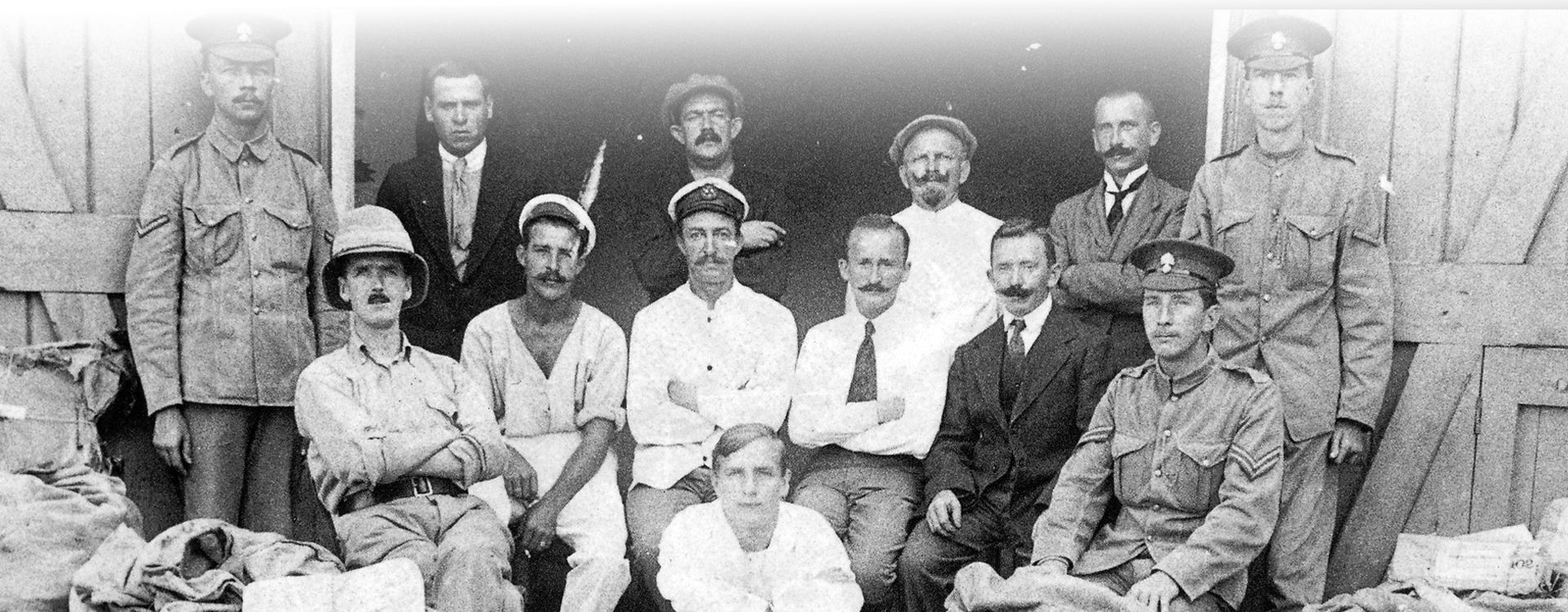
Maltese women also contributed to the war effort. To raise the morale of the various Allied forces stationed in Malta, women on the island-nation organized tearooms for military personnel in Sliema and Valletta, entertainment in military hospitals, and car and motor-launch excursions for patients. Sewing parties augmented the limited supplies of hospitals by providing pyjamas, shirts and socks for the wounded. Several Maltese women also joined the Voluntary Aid Detachment (VAD). Mary Muscat and Violet Briffa were Mentioned in Despatches for their singular devotion to duty in the Mtarfa and Cottonera hospitals. The Marchesa Corinna Scicluna provided her residence, Villa Dragonara, as a convalescent home for twenty officers and donated £100 each month toward its upkeep. Scicluna was an illustration of generosity of the Maltese, and her name is high on the long list of Maltese volunteers, which also includes Mrs. Bonavia, M.B.E., and Mrs. Mifsud, M.B.E. Maltese women played a significant part in the preparation of bandages in their homes for use in hospitals. Such work also provided additional income to their households.
Public Health Complications in The War
Strict precautions were taken during the war to prevent the transmission of diseases from soldiers to the civilian population, and vice versa. This was especially important when hospitals were filled with dysentery and enteric cases. However, some cases of plague did appear in 1917, which may or may not have been carried by soldiers invalided to Malta from other countries. Luckily the disease was contained and resulted in only three deaths. An outbreak of cholera in 1917 caused another 100 deaths, while incidences of venereal disease also increased considerably.
In the final months of the war, the population’s health was threatened when the 1918 flu epidemic reached Malta’s shores. Case numbers soon reached 4,651 in Malta and 1,203 in Gozo. Among servicemen in June 1918, there were 696 cases, of which 406 were patients who had been transferred to Malta from hospitals in Salonika. The following months brought 3,496 more cases and sixty-six deaths. Among the 2,340 POWs, there were 551 cases and fifteen deaths. In Malta’s civilian population from September to November 1918, there were 12,000 cases and 630 deaths.
Post-War Years
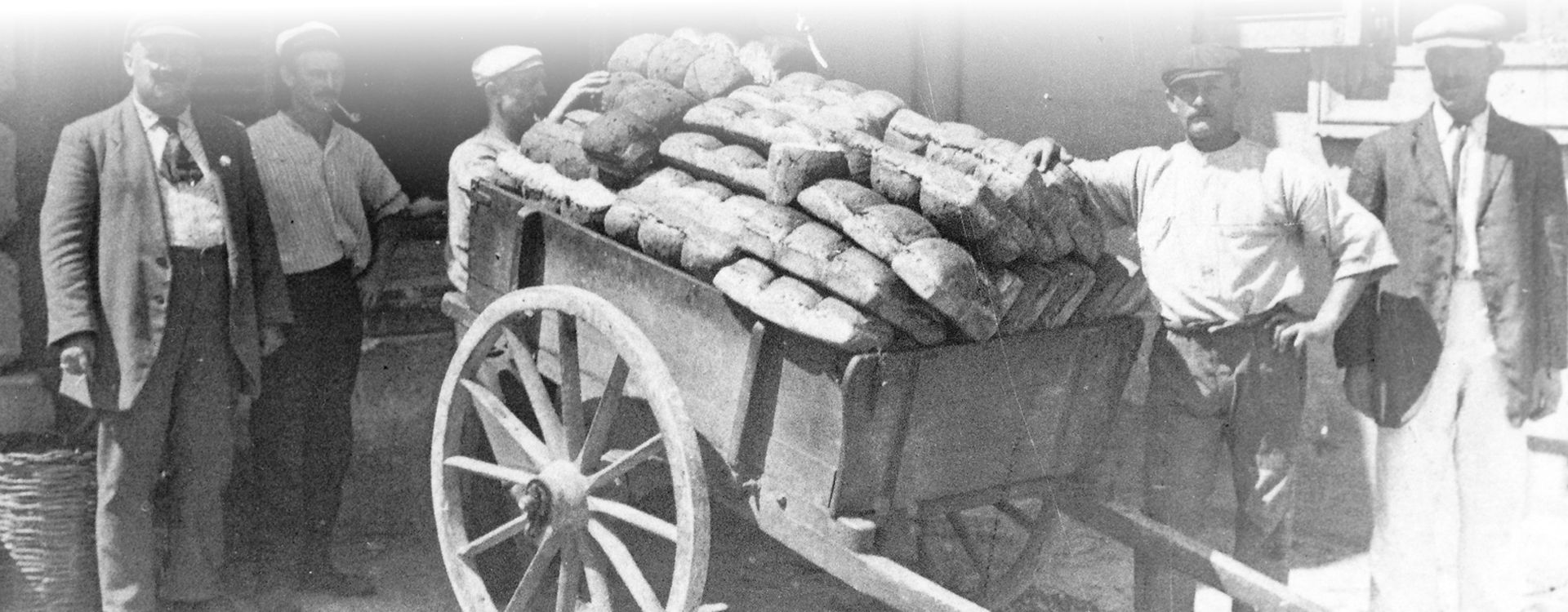
The end of the war brought high prices for essential commodities, especially bread, as well as food scarcity, which resulted in rioting on June 7, 1919. When British troops fired on the crowds, four Maltese were killed. This pressured Britain‘s colonial authorities to establish in 1921 Malta’s first self-government, with general elections and Malta’s first parliament — the Legislative Assembly. In the post-war years, following mass dismissals from HM Dockyard and the Royal Navy and a shrinking economy, there was the first large organised emigration to distant parts of the British Empire, such as Australia and Canada.
Charles Debono, Curator National War Museum - Heritage Malta